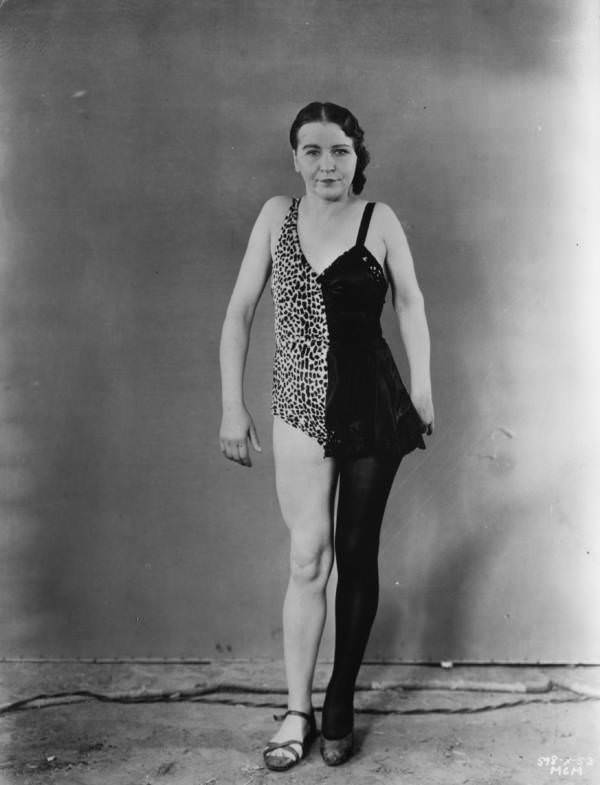
Centered against a plain studio backdrop, Josephine-Joseph stands with a calm, direct gaze that feels both posed and defiantly personal. The costume is strikingly split down the middle—one side a patterned bodice and bare leg, the other a darker, sleeker line—echoing the performer’s famous billing as “half male, half female.” With the lighting kept simple and the set stripped of distraction, the portrait turns the body itself into the era’s headline, the same kind of visual hook that once pulled crowds toward circus sideshow banners.
Vaudeville stages, traveling carnivals, and early Hollywood all relied on spectacle, and performers like Josephine-Joseph were marketed through carefully constructed contrasts. The photograph’s symmetry reads like a deliberate showman’s device: the hair, the outfit, and the stance suggest an act designed to be understood at a glance, even from a distance. Yet the stillness of the pose also hints at the human behind the billing, caught between the public’s curiosity and the performer’s own control of the image.
Connection to the 1932 film Freaks makes this portrait especially compelling for readers interested in pre-Code cinema history, sideshow culture, and the complicated legacy of “freak show” entertainment. Today, the same image invites a different kind of attention—less about gawking, more about understanding how gender presentation, disability narratives, and exploitation intertwined in the popular culture of the early twentieth century. For anyone searching for Josephine-Joseph photos, Freaks cast context, or circus sideshow history, this studio portrait offers a stark, unforgettable entry point.