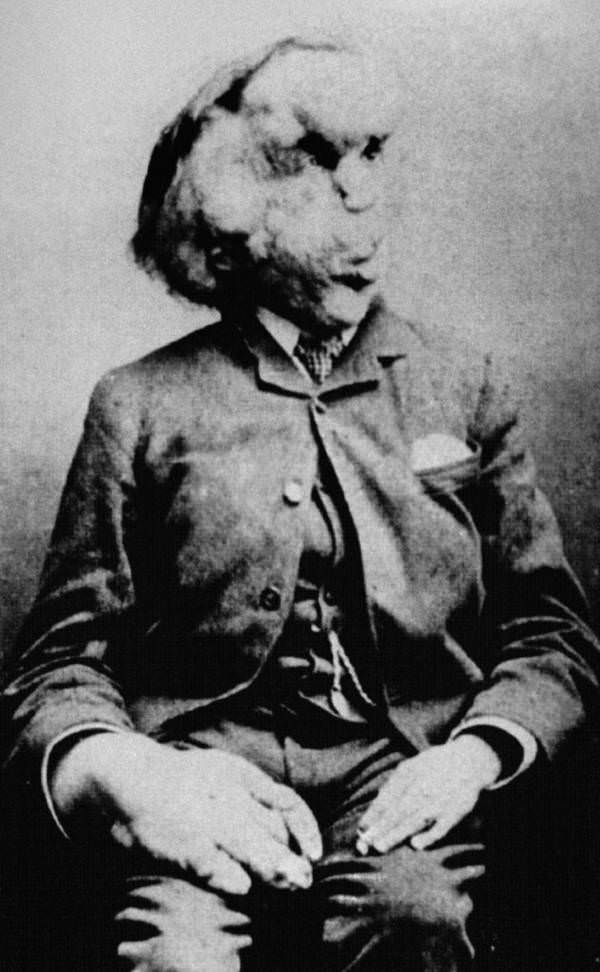
Few Victorian-era portraits are as confronting—or as quietly dignified—as this one of Joseph Merrick, remembered as England’s “Elephant Man” in the 1880s. Seated in formal attire, with a buttoned jacket and hands resting carefully in his lap, Merrick is presented with the studio seriousness typical of the period. The stark lighting and plain backdrop leave the viewer with nowhere to look but the man himself, inviting attention beyond sensational labels.
Merrick’s face and head, marked by the severe physical differences that made him a public curiosity in his lifetime, contrast sharply with the deliberate respectability of his clothing. That tension tells its own story about the late-19th-century world: a culture fascinated by medical anomaly, spectacle, and “freak show” exhibition, yet also one that used portrait photography to confer status, identity, and permanence. In this frame, the camera records both the harsh reality of his condition and the effort to be seen as more than it.
Looking at the photograph today, it’s worth resisting the easy shorthand of “weird” and instead reading it as a document of social history, disability history, and Victorian attitudes toward difference. The image sits at the crossroads of entertainment, medicine, and emerging public empathy, making it essential for anyone exploring Joseph Merrick’s life and the era that shaped his legacy. For readers searching for an authentic historical photo of the Elephant Man, this portrait remains one of the most haunting and human records of his time.