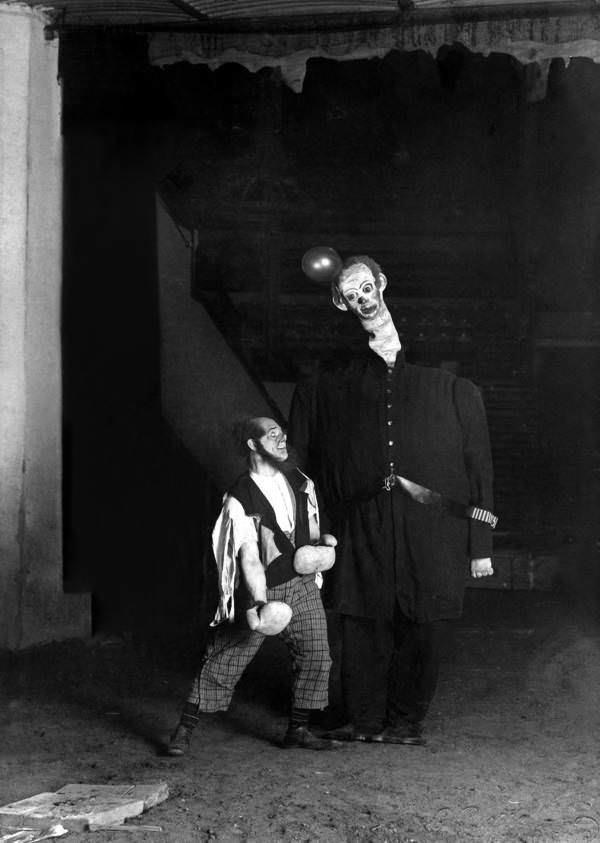
A pair of German clowns pose in an austere, shadowy space, turning a bare wall and dusty floor into a stage through sheer presence. One performer stands tall in a dark suit with a fixed, painted grin and exaggerated features, while the smaller partner leans forward in patterned trousers and a harlequin-style jacket. The contrast in height and posture does the comedic work even before a joke is told, a classic visual gag made timeless by the camera.
What lingers is the strange intimacy between circus playfulness and late-19th-century realism: heavy fabric, stiff collars, and the unadorned setting feel more like a workshop than a theater. Their makeup reads as both mask and identity, amplifying expressions that would carry across a crowd, yet in this close view it becomes slightly unsettling—part laughter, part uncanny. Even the simple prop-like shapes at the smaller clown’s waist hint at slapstick routines built around exaggeration and surprise.
For anyone drawn to circus history, German entertainment culture, or the evolution of clown imagery, this 1899 photograph offers a vivid glimpse of performance before modern spectacle. It’s “weird” in the best way—an authentic moment where humor, craft, and a hint of menace overlap, reminding us that comedy has always had edges. As a historical photo for a WordPress post, it’s rich in texture and atmosphere, and it invites readers to look longer than they expect.