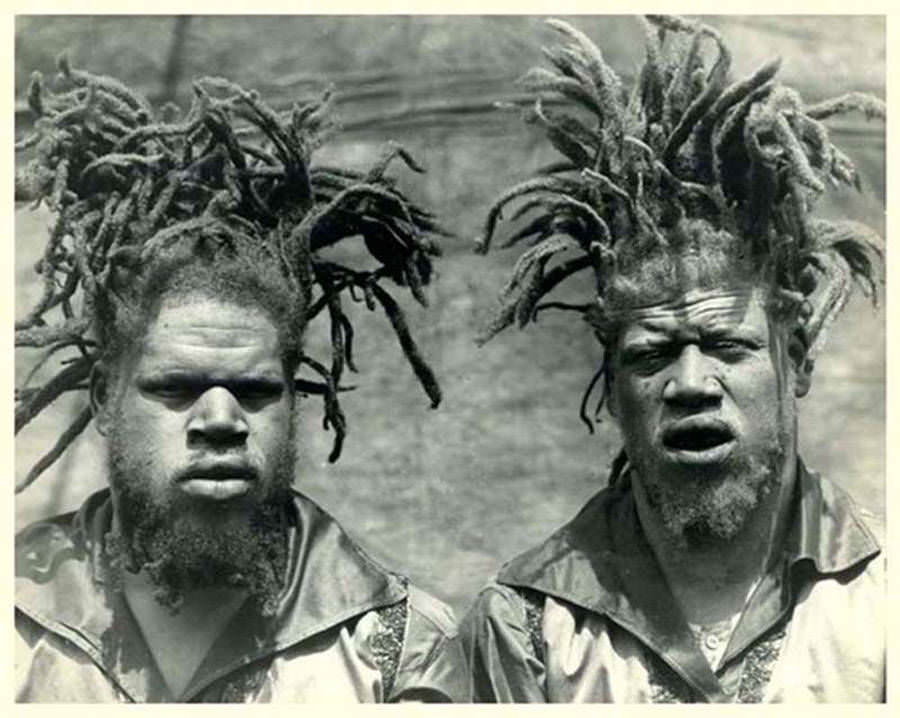
Two men stare straight into the lens, posed close together as if the photographer wanted no room for separation. Their faces read as unmistakably similar—identical twin features set in firm expressions—while their hair rises in dramatic, textured spikes that make the portrait hard to forget. The plain outdoor backdrop keeps attention fixed on the brothers themselves, turning a simple photograph into a confrontation with the viewer.
George and Willie Muse, described in the title as Black albino identical twins, lived at a time when difference was routinely treated as spectacle and vulnerability. In the Jim Crow-era American South of the 1920s, racism shaped everyday life, and albinism could draw dangerous curiosity on top of already rigid segregation. The tension in their gaze feels less like performance than endurance, a reminder that the camera could be both a tool of documentation and a doorway to exploitation.
Reading this image today means looking past the “weird” label and asking what it cost to be seen, named, and marketed in an unequal world. The Muse brothers’ portrait belongs in conversations about African American history, disability and difference, and the ethics of early popular entertainment and photography. It’s a striking piece of visual history that invites closer thought about identity, survival, and how the past taught audiences to look at people who didn’t fit the era’s narrow norms.