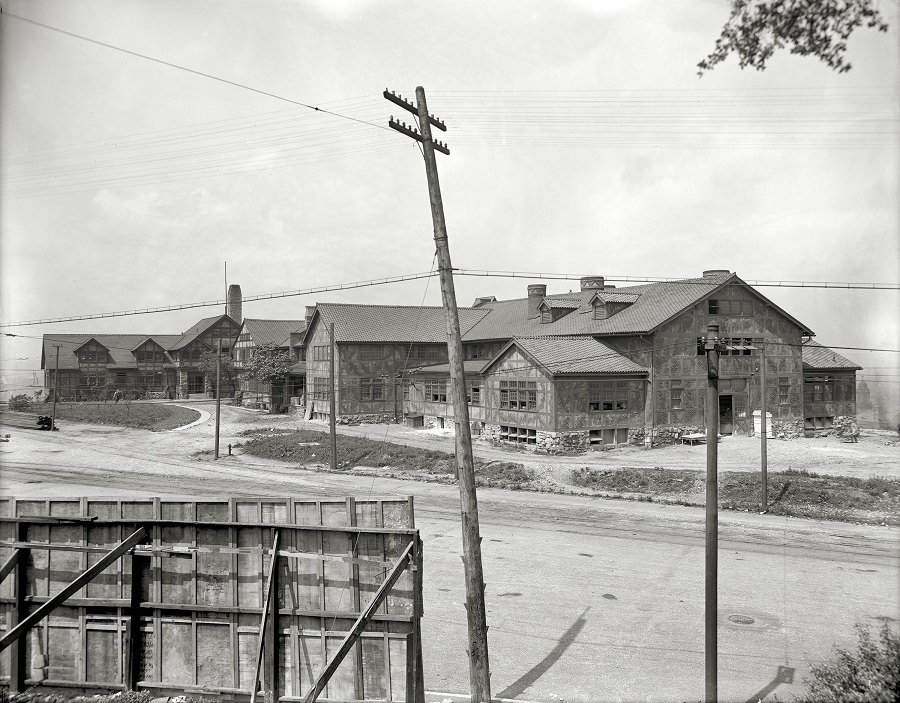
Set on a broad Cincinnati streetscape, the Rookwood Pottery complex appears as a sturdy cluster of low buildings, their long rooflines and gabled dormers stepping back across a gentle rise. Timber framing and stone foundations give the works a handcrafted, almost village-like character, while wide windows hint at the light needed for design, glazing, and finishing. Overhead, a web of utility wires stretches across the sky, a quiet reminder that this celebrated craft industry also belonged to the modernizing city.
In the foreground, the road and curb create a clean horizontal stage before the factory buildings, with telephone poles cutting bold vertical lines through the view. The scene feels transitional: parts of the grounds look unfinished and raw, and the structures themselves read like a campus still settling into place. Details such as roof vents, chimneys, and attached wings suggest multiple specialized spaces—kilns, workshops, storage—working together to produce the pottery that made Rookwood a name beyond Ohio.
For anyone searching “Rookwood Pottery Cincinnati circa 1906,” this photograph offers more than architecture; it offers context for how an arts-and-industry landmark fit into its surroundings at the start of the twentieth century. The absence of crowds keeps attention on the built environment and the infrastructure that supported it, from paved street to power lines. As a piece of local history, it bridges “places & people” by showing the workplace that shaped daily routines, skilled labor, and the city’s creative reputation.