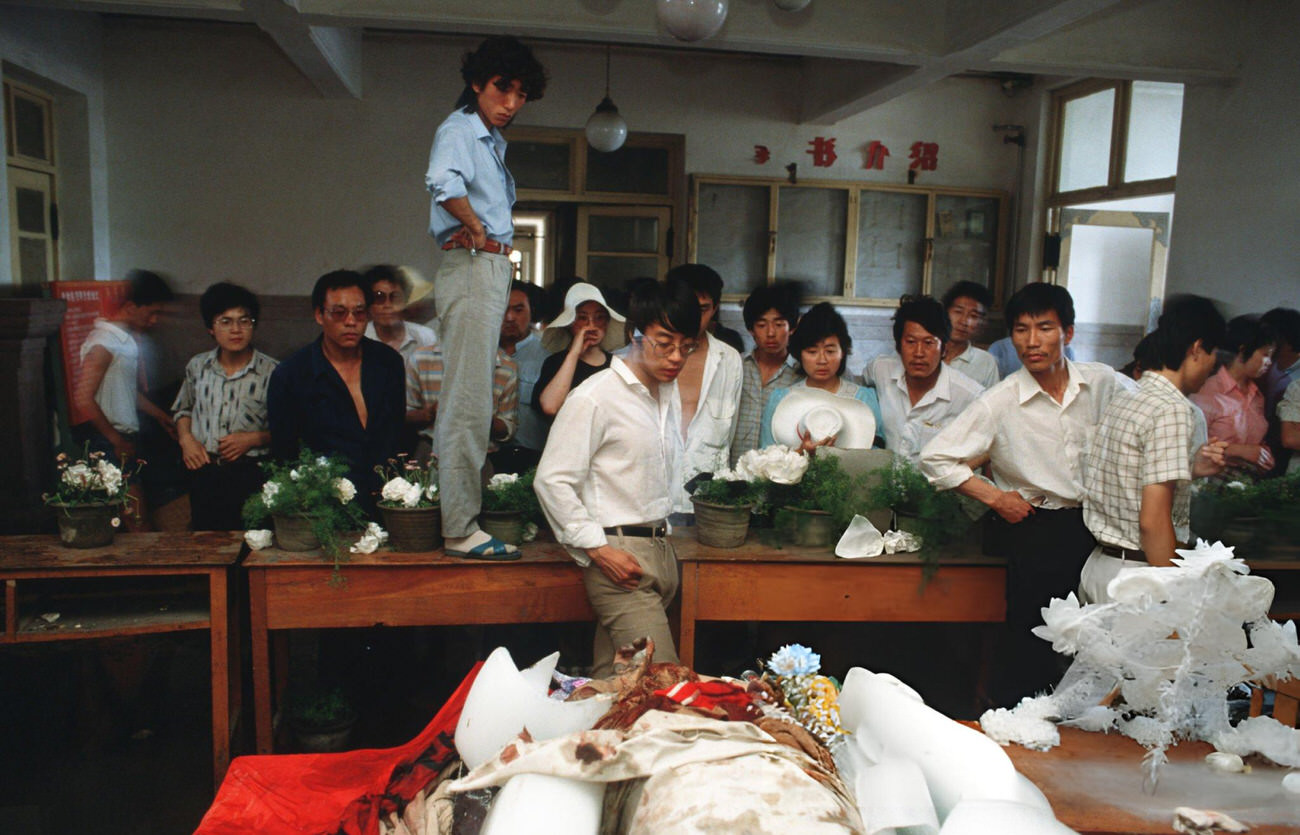
A crowded room, harshly lit and heavy with silence, draws the viewer straight into the aftermath of political violence in 1989. Onlookers press forward in ordinary shirts and summer sleeves, some perched on tables for a better view, their faces caught between shock, disbelief, and the grim need for certainty. In the foreground lies the covered body of a protestor in a makeshift morgue, surrounded by improvised offerings—flowers, scraps of paper, and the debris of hurried arrangements.
Small details underline how temporary and overwhelmed this setting is: classroom-like furniture pushed into service, potted plants lined up as if to soften what cannot be softened, and shattered white foam or plaster scattered nearby. The crowd’s posture tells its own story—heads tilted, hands on hips, eyes fixed—suggesting a public reckoning where grief becomes communal and private sorrow is forced into view. Nothing here feels ceremonial in the traditional sense; it reads instead as a spontaneous vigil shaped by urgency and fear.
For readers searching the history of protests and civil conflict, this photo stands as a stark document of how dissent can end and how communities respond when confronted with a body that symbolizes a larger struggle. Without relying on a single identifiable place or name, the scene evokes the broader global climate of 1989, when public demonstrations and state power collided in dramatic and often tragic ways. It’s a reminder that the history of protest is also a history of mourning, witnessed not only by cameras but by crowds trying to understand what has been lost.