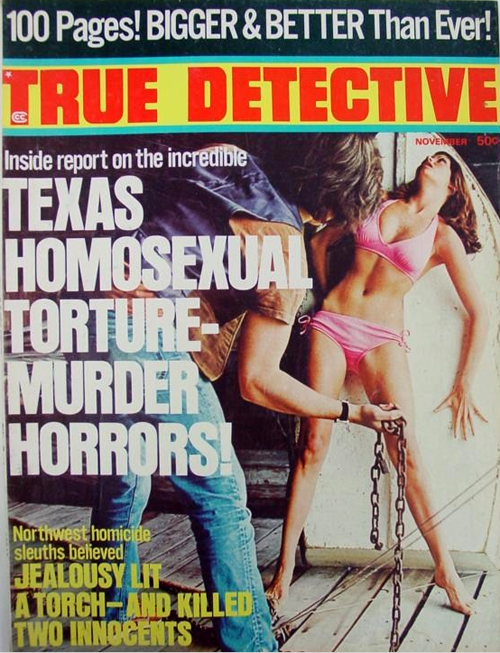
Lurid crime publishing is on full display in this pulp cover for *True Detective*, shouting “Texas Homosexual Torture-Murder Horrors!” in block letters meant to stop a reader cold at the newsstand. The promised “inside report” and oversized claims of “Bigger & Better” speak to a mid-century marketplace where sensational headlines were treated as entertainment, not just information. Even the typography—stacked, breathless, impossible to ignore—functions like a sales pitch for dread.
Across the scene, staged violence is used as bait: a man leans in with a length of chain while a woman in bright lingerie recoils against a rough interior backdrop, a tableau designed to imply captivity and danger without offering context or nuance. The visual contrast of skin, steel, and weathered wood turns human fear into a prop, reducing the suggestion of crime to an eroticized shock. Whatever the underlying case may have been, the cover’s priority is clearly escalation—more menace, more heat, more spectacle.
Reading it today, the headline’s framing reveals as much about cultural attitudes as it does about true-crime storytelling, exploiting “homosexual” as a trigger word to amplify panic and stigma. The smaller blurbs—hinting at jealousy and homicide investigation—add a veneer of reportage while the artwork drives the emotional hit. For a WordPress post on historical true crime media, this image is a stark example of how pulp magazines packaged violence, sexuality, and prejudice into a commodity marketed as “true.”