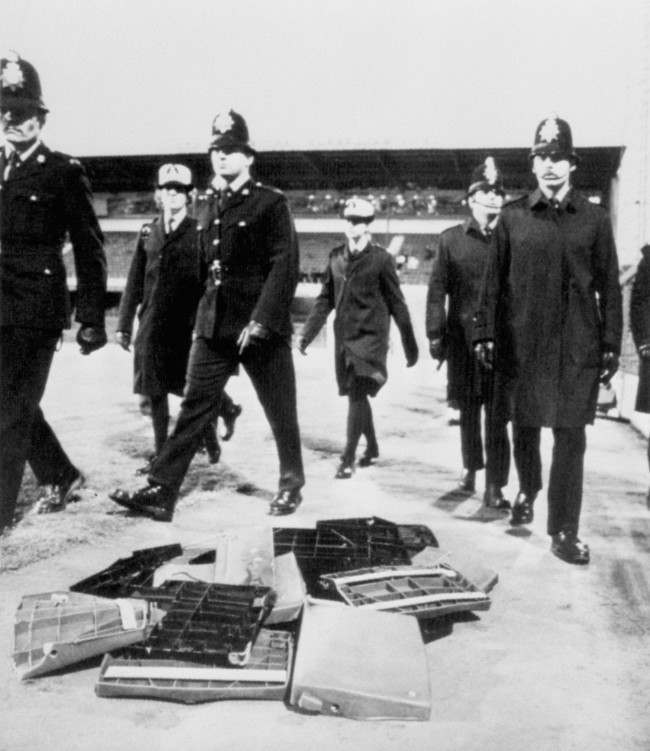
Booted police officers stride across the touchline with a wary, practiced calm, stepping around a jagged pile of plastic stadium seats that has landed far from the stands. Their dark uniforms and traditional helmets contrast sharply with the scattered debris in the foreground, turning a football ground into something closer to a cordoned incident scene. The title’s reference to irate Chelsea fans places the moment within the heated matchday culture of the 1980s, when tempers could spill into outright disorder.
In the background, the terraces and structure of the stadium loom as a reminder of where the damage began, while the officers’ spacing suggests a coordinated response rather than a hurried scramble. Those torn-out seat shells speak to the physicality of crowd trouble: not just shouting and surging, but the stadium itself being pulled apart and repurposed as projectiles. Even without a visible scoreboard or clear venue markers, the composition tells a familiar story from British football’s most turbulent era.
For readers interested in football history, crowd control, and the changing face of stadium safety, the photograph encapsulates a period that helped drive major reforms in policing and ground design. It’s a stark snapshot of how matchday passion could tip into violence, and how quickly a sporting event could demand an emergency response. The scene also hints at what was at stake beyond the result—public order, player safety, and the future direction of the game’s culture.