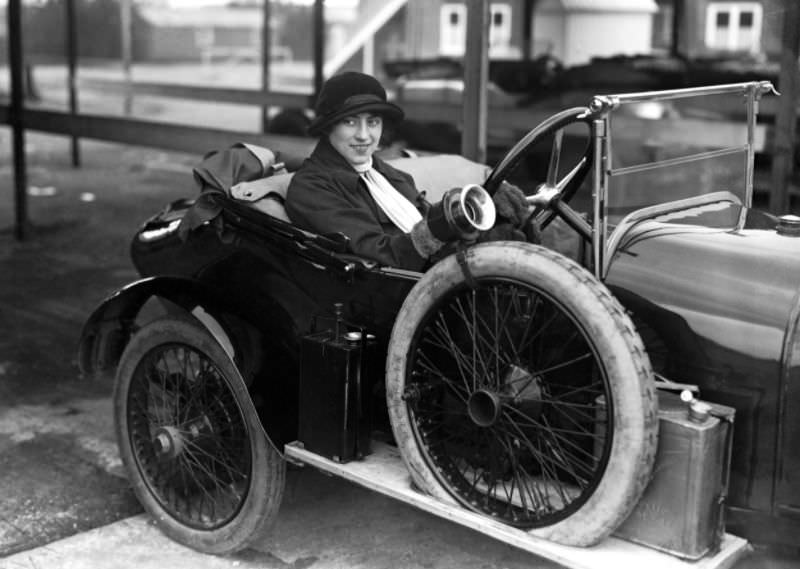
Violet Cordery sits confidently behind the wheel in 1930, dressed for speed in a cloche hat and heavy coat, her gloved hands resting easily as if the next run is already decided. The open cockpit frames her expression—calm, alert, and faintly amused—while the period racing car’s spare wheel and exposed fittings crowd the foreground, reminding us how mechanical and immediate motoring still was. Even at rest, the vehicle looks purposeful, built for endurance and control rather than comfort.
What stands out is the practical reality of early motorsport: narrow tires, minimal bodywork, and the ever-present tools of the trade carried within arm’s reach. The background architecture and sheltered setting suggest a trackside or club environment, placing the scene within the wider culture of interwar racing rather than a staged studio portrait. Details like the side-mounted spare and the robust steering setup underline how drivers of the era depended on ingenuity as much as courage.
As part of the story of the female racing drivers associated with the Brooklands Automobile Racing Club, this image speaks to a generation pushing against expectations in one of the most demanding sporting worlds. Cordery’s poised posture and direct gaze capture a moment when women were visibly claiming space in competitive motoring, not as novelty acts but as skilled participants. For readers exploring 1930s motorsport history, women in racing, and Brooklands-era automotive culture, the photograph offers an evocative window into the people and machines that shaped the sport.