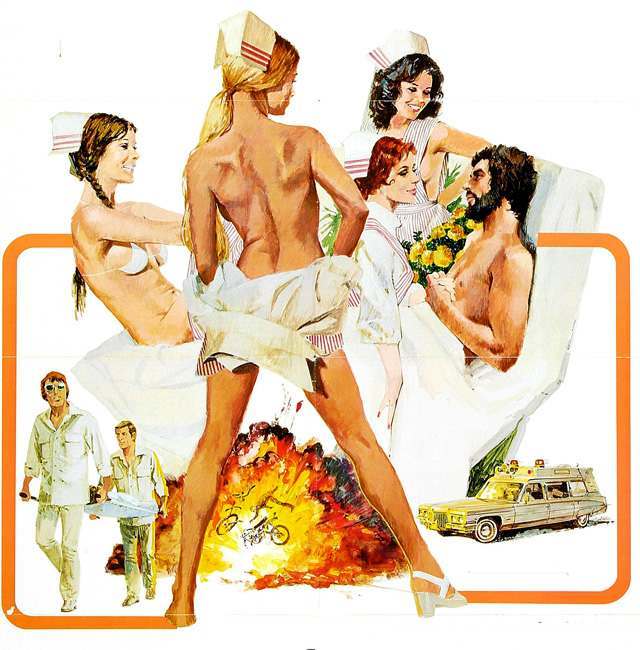
Painted like bold 1970s cover art, “Candy Stripe Nurses (1974)” leans into the era’s pulp sensibility with bright whites, warm skin tones, and the unmistakable candy-striped uniform accents. The composition is staged for maximum drama: nurses clustered around a reclining man in a hospital bed, smiles and gestures playing up a mix of care, flirtation, and theatrical tension. It’s less documentary record than pop-culture snapshot, the kind of illustration designed to sell a story at a glance.
Front and center, a tall figure turns away from the viewer, creating a commanding silhouette that anchors the scene while guiding the eye toward the bedside tableau. Around the edges, smaller vignettes hint at action beyond the ward—a rushing emergency vehicle, uniformed attendants, and an eruption of chaos rendered like a sudden genre pivot. That contrast between clinical space and sensational side-scenes is classic exploitation-era visual language, suggesting romance, peril, and rescue all at once.
For collectors and film-history fans, this image is a useful artifact of how nursing iconography was packaged in 1970s marketing: crisp caps, striped details, and a knowing wink toward melodrama. The clean background and poster-like framing make it especially readable as vintage cover illustration, perfect for discussions of retro medical themes, pulp art, and the aesthetics of 1974 cinema and print culture. Whether you’re here for the design, the nostalgia, or the cultural context, it’s a striking example of how an era turned caregiving into a high-stakes, high-color spectacle.