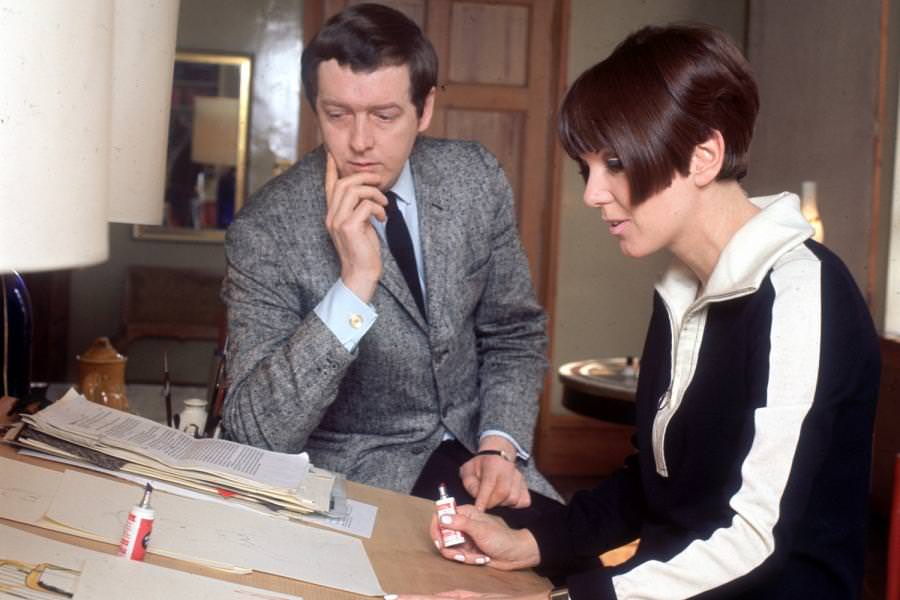
Framed by a cluttered desktop of papers and a small tube of paste, Mary Quant leans in mid-conversation, her sharp, geometric haircut echoing the clean modern lines that would come to define Swinging London style. A suited man sits close by, chin in hand, listening with the focused air of planning rather than leisure. The informal office setting—part backroom, part studio—suggests the practical work behind a boutique’s public glamour.
The title places the scene in 1959, at Quant’s newly opened Knightsbridge branch of Bazaar, when fashion retail was beginning to feel less like a salon and more like a cultural workshop. The close proximity of tools, notes, and sketches hints at design decisions being made on the spot, where merchandising, garments, and branding meet. In this moment, boutique fashion reads as a collaborative enterprise: ideas tested, revised, and prepared for the shop floor.
Seen today, the photograph works as a vivid document of British fashion history, capturing the early energy that would soon be associated with the Kings Road, youth culture, and the mini-skirt’s contested origins. Quant’s poised concentration stands out—less celebrity portrait than working day—making the image valuable for anyone researching Mary Quant, Bazaar, and the changing language of 1960s fashion and culture. It’s a reminder that iconic trends often begin not under spotlights, but at desks where the future is drafted in plain sight.