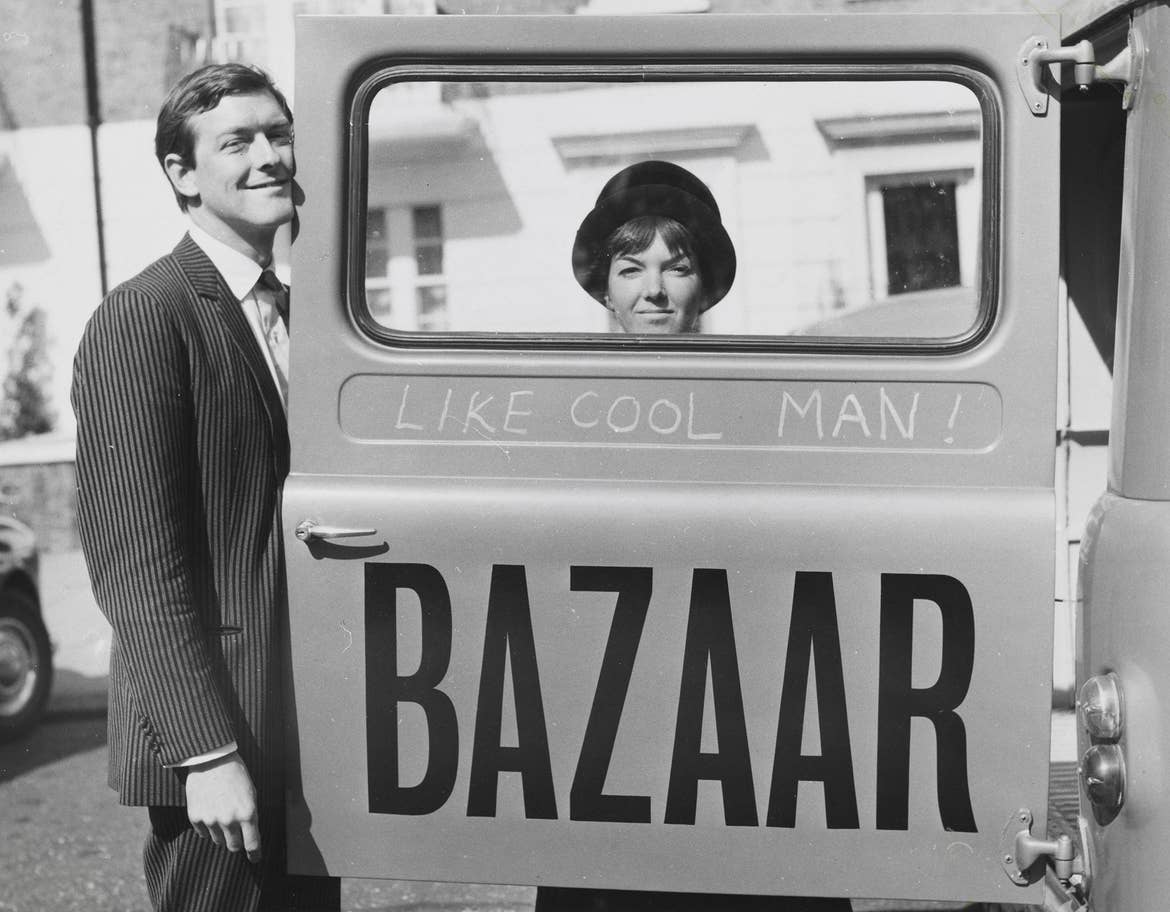
Leaning against the open door of a van marked “BAZAAR,” Alexander Plunket-Greene wears a sharp, narrow-lapelled suit and an easy smile that feels unmistakably early 1960s. In the window above the bold lettering, Mary Quant appears framed like a cameo, her dark hat and neat fringe giving her the crisp, graphic silhouette that would soon define Swinging London fashion in the public imagination. A playful scrawl—“LIKE COOL MAN!”—adds a cheeky, streetwise note, suggesting a candid moment staged with the wink of youth culture and advertising savvy.
John Cowan’s photograph thrives on contrasts: the clean, modern typography of the van, the striped tailoring, and the bright daylight flattening the scene into high-impact shapes. Quant’s gaze meets the camera from behind glass while her husband stands in full view, creating a layered portrait of partnership and persona—private life threaded into public image-making. Behind them, out-of-focus buildings hint at an urban setting without pinning the moment to a specific street, keeping the emphasis on style and attitude rather than place.
As a snapshot of Fashion & Culture, the image sits comfortably alongside stories of the King’s Road, boutique energy, and the mini-skirt’s rise—less a single origin tale than a swirl of influences captured at street level. The “Bazaar” name on the vehicle nods to the retail and media ecosystem that helped new looks travel fast, from shop floor to magazine page to the wider world. Seen today, Quant and Plunket-Greene read as collaborators in a modern brand of British cool: self-aware, playful, and ready for the decade that would make them icons.