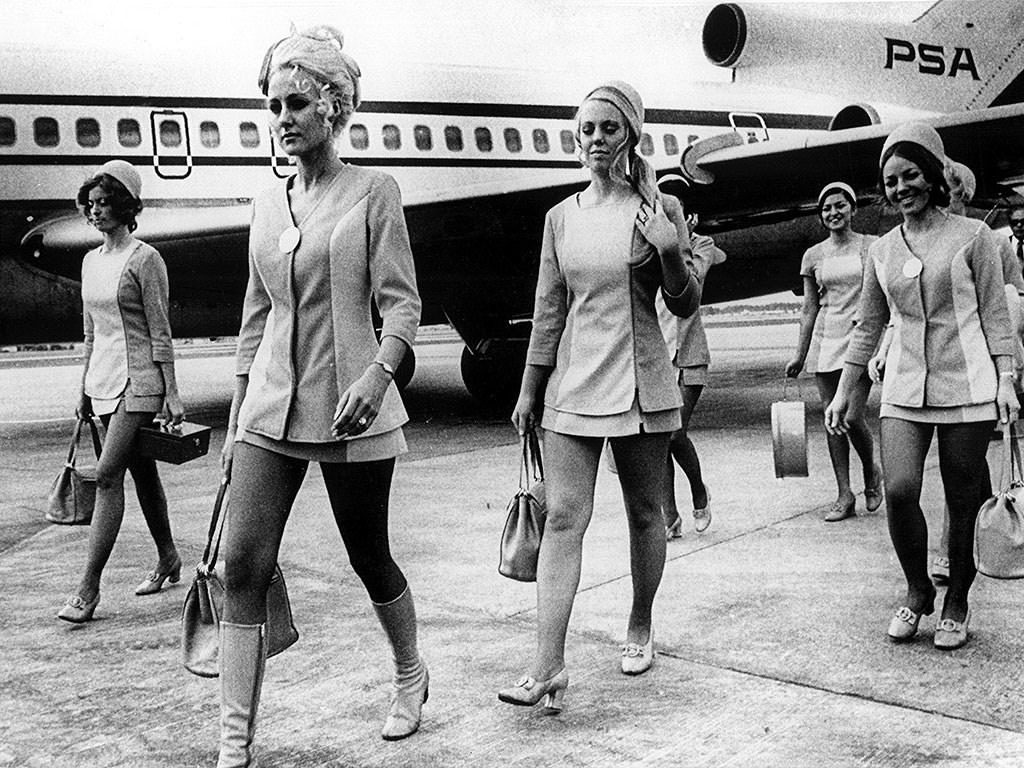
Against the sleek fuselage of a PSA jet, a line of stewardesses steps across the tarmac with practiced composure, each carrying a handbag or flight case as if the day were routine. Their uniforms—structured mini-dresses, matching jackets, and bold headscarves—place the scene firmly in the early 1970s, when airline branding leaned hard into modern fashion. The camera lingers on movement and posture: heels on concrete, shoulders set, eyes forward, the choreography of air travel made visible.
Yet the title anchors this moment in something far more fraught: a San Francisco-to-Los Angeles flight hijacked and forced onward to Cuba, with the crew later arriving in Miami. That contrast—between polished presentation and the reality of crisis—captures a tense chapter in aviation history, when hijackings became an unsettling feature of the era. What reads at first glance like a fashion spread becomes a document of professional duty under pressure, and of the emotional labor demanded of flight attendants in extraordinary circumstances.
For readers drawn to airline history, 1970s style, or the cultural shifts that reshaped commercial flying, this photograph offers a rare intersection of fashion and public memory. The PSA lettering, the period silhouettes, and the calm procession on the runway all help tell a story about how airlines sold glamour even as security anxieties mounted. It’s an image that rewards a second look—both as a snapshot of flight attendant fashion and as a reminder of the human steadiness behind the headlines.