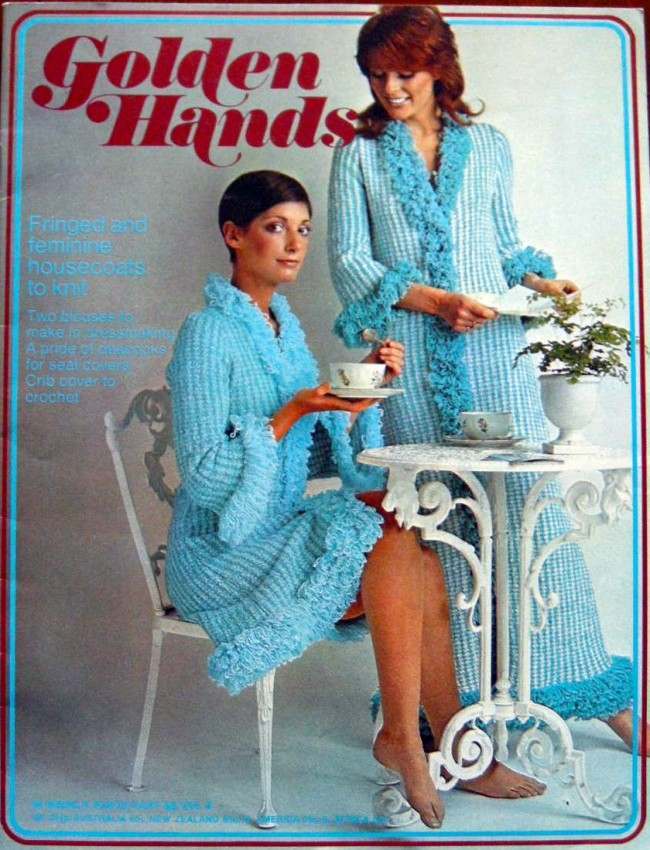
Golden Hands splashes across the cover in bold, swooping lettering, setting an unmistakably glossy, magazine-like tone for what is ostensibly a knitting and crochet pamphlet. Two models pose in matching sky-blue crocheted housecoats trimmed with dramatic ruffles, the fabric hugging the body with a softness that reads more boudoir than broom closet. Even the color palette—powdery blues against a pale studio backdrop—leans into the era’s dreamy, curated domestic fantasy.
At a small white wrought-iron café table, one woman sits with a teacup while the other stands smiling, as if mid-conversation in a staged afternoon ritual. The garments’ open textures and plunging neckline details flirt with lingerie styling, suggesting that “at-home” fashion had become a place to experiment with allure rather than hide from it. Decorative props—a potted plant, delicate cups, ornate furniture—frame the scene like a romantic set, making the craft look aspirational and a little mischievous.
That’s the joke embedded in the title: the covers of these knitting pamphlets can look like adult reading, because the marketing borrowed heavily from fashion editorial and soft-focus glamour. What reads today as playful camp once served a purpose, selling yarnwork not merely as thrift or utility but as a lifestyle—self-made, sensual, and trend-aware. In its own quiet way, the image captures a moment when needlework patterns stepped out of the back pages and into the spotlight of pop culture style.