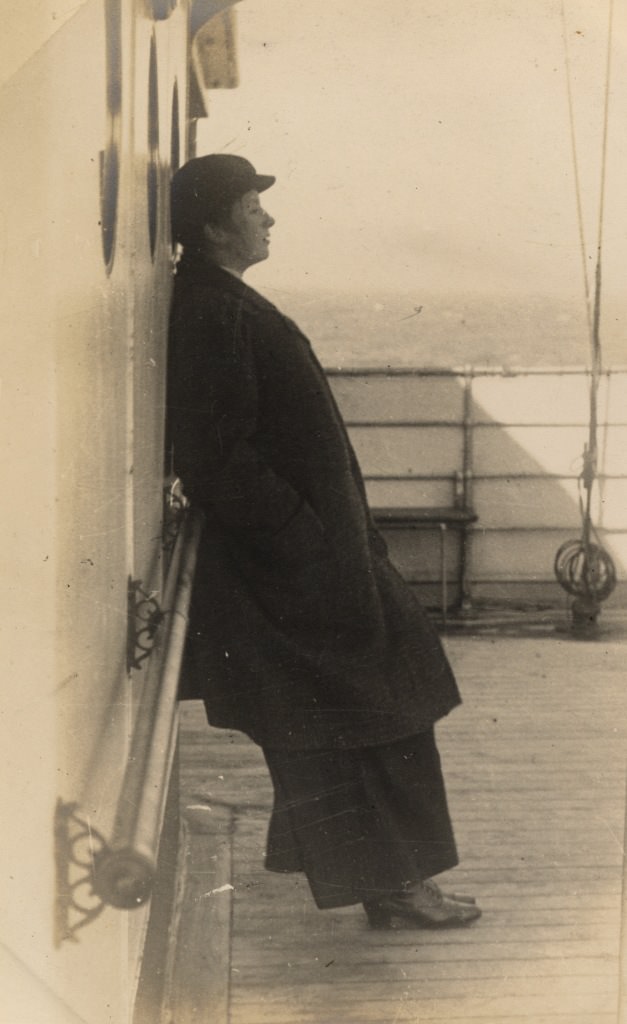
Leaning back against the ship’s wall, a solitary woman stands on the open deck with her face turned toward the pale horizon. Her posture is telling—chin lifted, shoulders settled, hands kept close—as if she is bracing herself against the roll of the sea or searching for steadiness in the salt air. A dark hat sits low, and a long, practical overcoat falls neatly over a skirt, the kind of Edwardian travel outfit chosen for wind, spray, and the public gaze.
Along the left edge, the vessel’s side and fittings frame her in a narrow corridor of space, while deck railings and rigging lines lead the eye outward to water and sky. The scene is spare and intimate, the kind of candid moment that travel photography often preserves better than posed portraits: a private pause in a public place. In the title’s suggestion of seasickness, the slight backward lean and stillness read like a traveler’s strategy—anchoring the body, breathing through discomfort, and waiting for the next calm stretch.
As a glimpse of early 20th-century seaside culture, the photograph balances fashion and feeling, capturing how leisure travel could be both stylish and physically demanding. The woman’s layered clothing speaks to the era’s norms of respectability and the realities of weather at sea, even on short crossings associated with popular English resort towns. For anyone interested in Edwardian beach fashion, maritime travel, or the quieter human side of holidaymaking, this image offers a memorable, SEO-friendly window onto life at the shoreline and beyond.