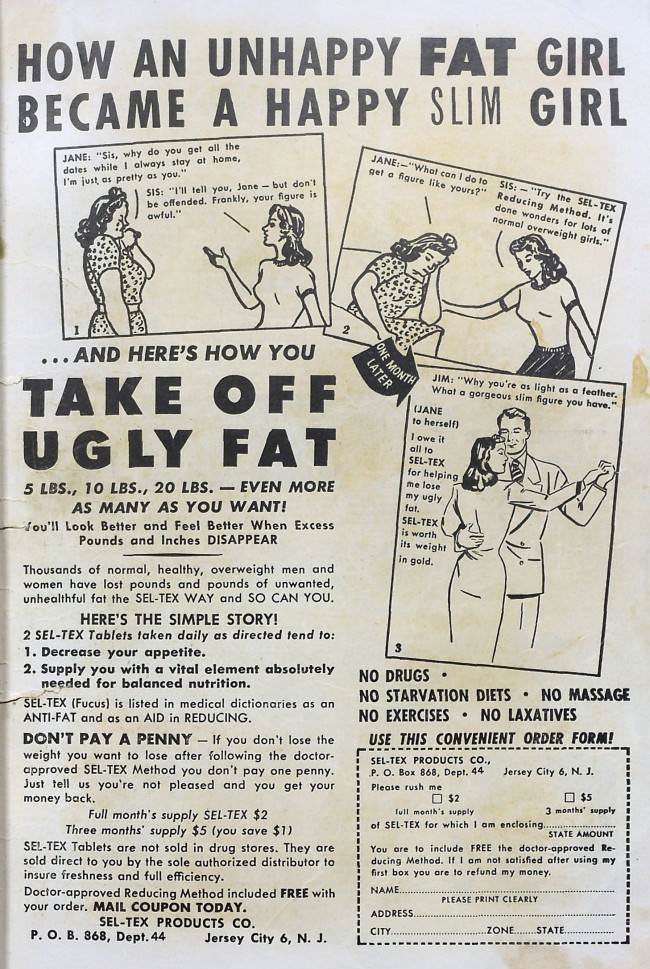
Bold, bossy typography shouts a promise that “unhappy” and “fat” belong together while “happy” and “slim” are portrayed as the inevitable reward, and the page wastes no time turning that judgment into a sales pitch. The ad’s cartoon panels stage a little morality play: a woman is mocked for her figure, then offered a simple “reducing method,” and finally presented as transformed and socially desired. It’s a blunt snapshot of how mid-century dieting culture packaged body shame as entertainment—and then sold the “cure.”
The copy leans hard on certainty, claiming weight will “disappear” by taking two tablets a day and insisting there are “no drugs,” “no starvation diets,” “no exercises,” and “no laxatives.” That contradiction is part of the historical interest: miracle-weight-loss marketing often tried to sound medical and effortless at the same time, using pseudo-scientific phrasing, doctor-approval language, and a mail-order coupon to lower consumers’ skepticism. Even the phrasing “take off ugly fat” shows how openly advertisers tied appearance to moral worth, turning a complex human experience into a before-and-after punchline.
For readers interested in vintage advertising, diet pill history, and the roots of modern body-image pressure, this piece is both funny and unsettling. The humor comes from its overconfidence and melodrama; the discomfort comes from how recognizable the tactics still are—social comparison, romantic reward, and the seductive idea of an easy fix. Seen today, the ad reads less like health advice than a cautionary artifact of weight-loss propaganda and the dangerous promises that once traveled straight to the mailbox.