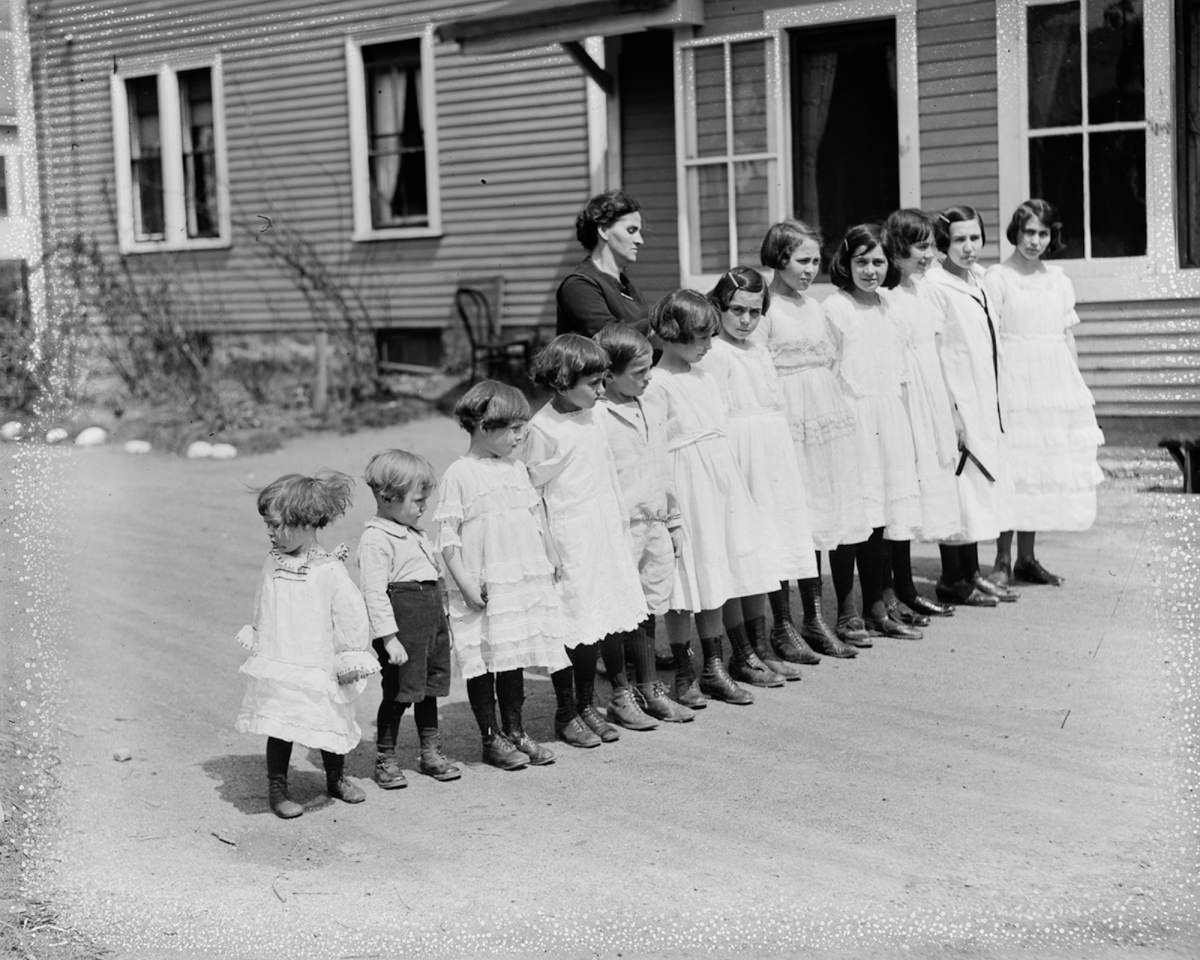
Thirteen children stand in a neat line outdoors, arranged from the smallest in front to the tallest at the far end, as if someone has just called for “all together now.” Several wear light, simple dresses with dark stockings and sturdy lace-up boots; one small child in short trousers breaks the pattern, adding to the scene’s gentle humor. Their expressions range from solemn to faintly amused, the kind of look that suggests the novelty of being counted and posed rather than allowed to run free.
Behind them sits the everyday world that made family life visible: a clapboard building with sash windows, an open doorway, and a plain yard where the ground is more practical than picturesque. An adult woman stands slightly apart, watchful and composed, reinforcing the feeling that this is both a domestic moment and a public presentation. The title’s playful “Pub-lic Domain” wink fits the way the group reads like a local curiosity—“the Noonan’s” and their many little patrons—lined up for the camera like regulars at a community gathering.
For readers drawn to historical photos of large families, childhood clothing, and early neighborhood architecture, this image offers details worth lingering over: the matching footwear, the tidy hems, the careful spacing between shoulders, and the mix of shyness and pride. It’s an SEO-friendly slice of social history that invites questions about work, household routines, and the rituals of documenting family size for friends, neighbors, or a newspaper. Even without firm names or dates visible in the frame, the photograph tells its story through posture, pattern, and the unmistakable comedy of trying to keep thirteen kids still at once.