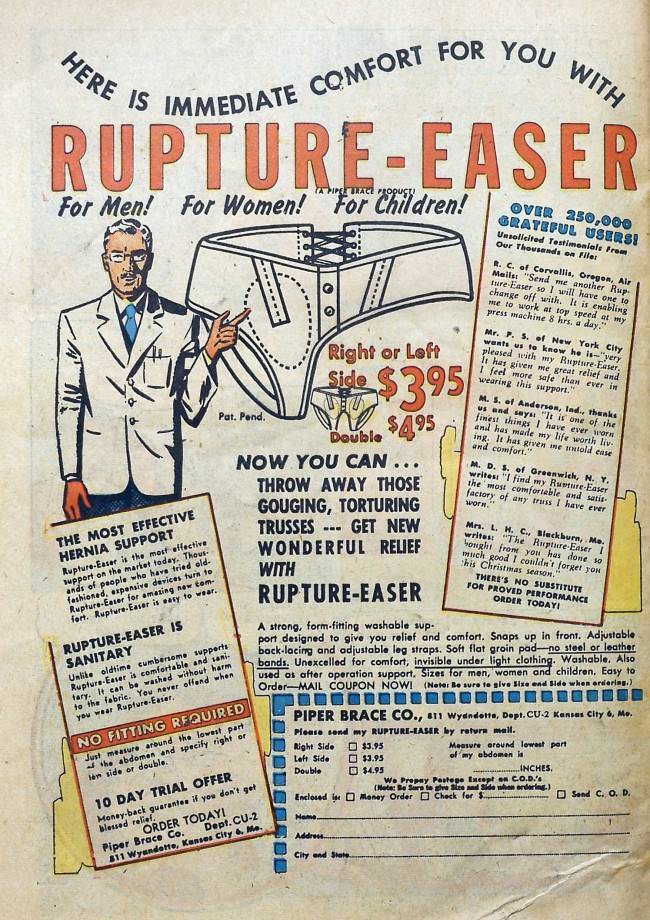
Across the page, the bold promise of “RUPTURE-EASER” sells immediate comfort with the kind of blunt confidence only old print advertising dared. A line drawing of a doctorly figure gestures toward a garment that looks suspiciously like the era’s tight “reducing” knickers—except here it’s marketed as a practical hernia support for men, women, and children. The pitch leans hard on authority and relief, turning an intimate medical problem into something you can supposedly fix with a snug, lace-up band.
The artwork puts the product front and center: a wide, structured undergarment with fasteners and a firm-looking front panel, presented like a miracle of modern design. Prices are printed plainly, and the copy talks up fit, washability, and comfort, tapping into the same anxieties shapewear ads always used—appearance, posture, and social ease—while adding the extra incentive of “support” where it matters. Even the phrase “throw away those trusses” hints at a consumer moment when mail-order solutions tried to replace bulkier medical devices with something that could pass as everyday clothing.
Small blocks of testimonial-style text and a coupon-like order section round out the scene, signaling a time when health products were routinely sold through magazines and catalogs with promises of quick results. It’s funny on first glance, but it’s also a revealing slice of social history: how bodily discomfort, stigma, and the quest for a slimmer silhouette collided in one all-purpose garment. For anyone interested in vintage advertising, old-fashioned shapewear, or the history of hernia belts and trusses, this piece is a memorable reminder that “fat-reducing knickers” weren’t always just about fashion.