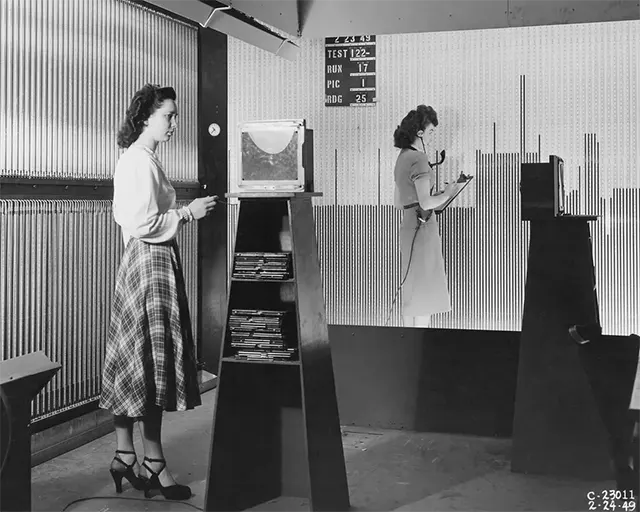
Inside a NACA workspace in 1949, two women stand in the calm intensity of a test environment, surrounded by the visual language of engineering: tall instrument panels, a cabinet of neatly stacked records, and a board marked with test details. One reads and records with practiced focus while the other keeps watch near the equipment, turning observation into numbers that designers and researchers could trust. The scene is spare and functional, yet it hums with the kind of disciplined routine that powered mid‑century aeronautics.
Their job title—“computers”—meant something very different before silicon: human expertise applied to measurement, calculation, and verification. Gathering air pressure readings demanded precision, patience, and an eye for subtle changes, especially when results could influence wind‑tunnel conclusions and the next iteration of an aircraft design. Even without seeing the full experiment, the instruments and log sheets suggest a careful chain of data handling, where behind every plot and report stood hours of meticulous work.
For readers exploring the history of NACA and the road to NASA, this photograph offers a grounded look at the people and processes behind American aviation research. It’s a reminder that innovation isn’t only dramatic breakthroughs—it’s also the steady, often uncelebrated labor of technical staff who ensured the numbers were right. As a WordPress feature on inventions and aeronautical science, the image pairs perfectly with discussions of women in STEM, early data work, and the everyday mechanics of research in the late 1940s.