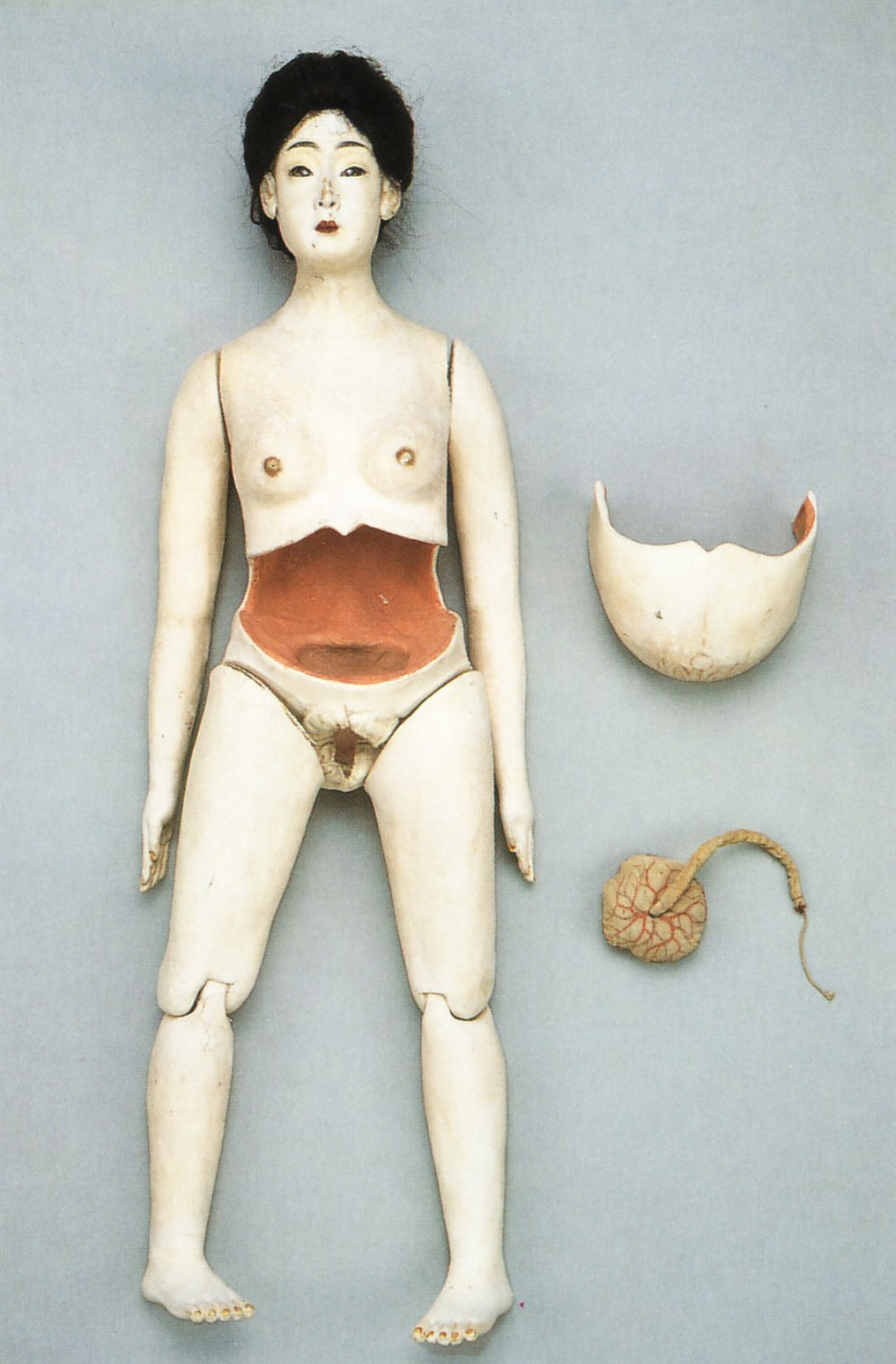
Laid out against a plain backdrop, an Edo-era “pregnancy doll” confronts the viewer with a calm, masklike face and a body engineered for demonstration rather than modesty. The torso opens to reveal a painted interior cavity, and nearby sit detachable pieces—one resembling a rounded belly panel, another suggesting the placenta and umbilical cord—arranged like props awaiting a presenter’s hands. Even without a stage around it, the object feels theatrical, halfway between anatomical model and curiosity-shop spectacle.
Such dolls occupy a strange crossroads in 19th-century Japanese material culture, where public fascination with the hidden workings of the body could be packaged as both instruction and entertainment. The removable abdomen and emphasized internal space hint at how pregnancy might be “explained” to paying audiences, offering a controlled glimpse of what was ordinarily private. In this way, the figure speaks to Edo period sideshow attractions and popular exhibitions that blended medicine, craft, and showmanship into a single, memorable display.
For modern readers searching the history of Japanese inventions and curiosities, the photograph underscores the remarkable technical imagination invested in these objects. The doll’s painted features, jointed limbs, and carefully separated components reveal not only artisanship but also a period appetite for visual learning—sometimes sensationalized, sometimes practical. Seen today, it invites a wider conversation about gender, spectacle, and the long tradition of teaching anatomy through crafted replicas in Japan.