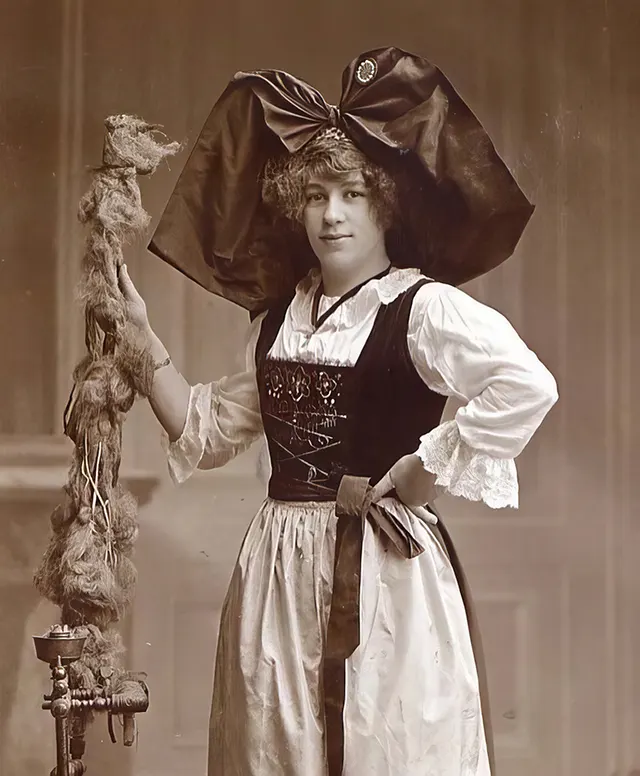
Dominating the composition is the dramatic Schlupfkapp, its oversized black bow fanning outward like wings and immediately signaling Alsatian folk dress. Beneath it, the sitter faces the camera with a calm, self-assured gaze, her curly hair framing a youthful face that feels both intimate and formal. The studio backdrop is spare, letting the distinctive headwear carry the story of regional identity and tradition.
Her clothing completes the classic silhouette associated with Alsace: a crisp white blouse with ruffled cuffs, a dark fitted bodice with decorative stitching, and a pale apron tied neatly at the waist. The careful contrast of textures—glossy ribbon, starched linen, and embroidered fabric—turns everyday garments into a statement of cultural heritage. Even without a visible setting, the outfit reads as a deliberate presentation of local fashion, made for remembrance as much as for wear.
To one side, she rests a hand on a tall staff or pole draped with fibrous material, an intriguing prop that hints at craft, agriculture, or domestic labor often intertwined with rural life. The pose—one hand at the hip, the other anchoring the prop—adds confidence and a sense of role, as if she is embodying the community as well as herself. Taken together, the Schlupfkapp and traditional Alsatian costume become more than clothing: they act as a visual emblem of belonging, continuity, and the way fashion preserves history in cloth and ribbon.