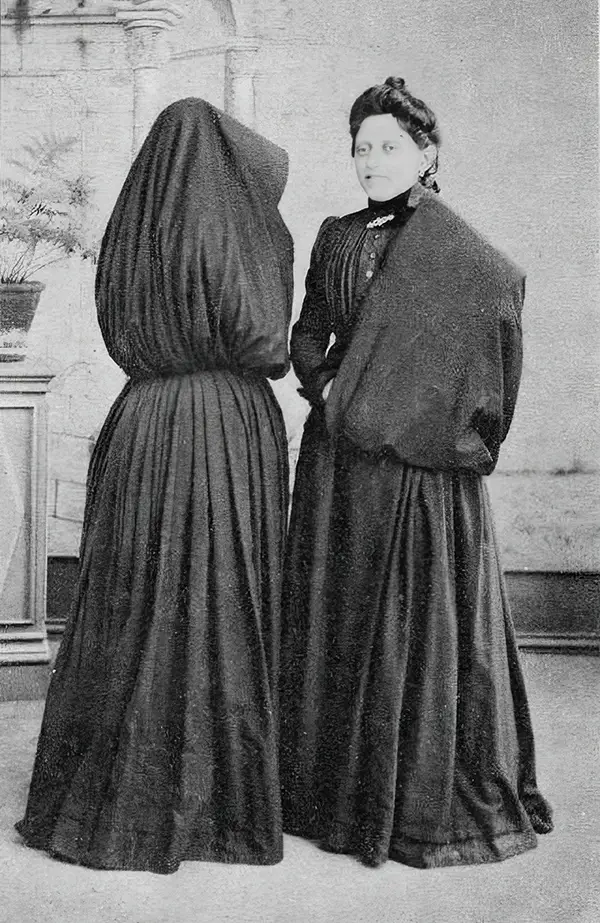
Between two figures in dark dress, the eye is drawn first to the dramatic Azorean hooded cape, a voluminous, pleated garment that rises high and forward to create a sheltered silhouette. The fabric falls in heavy folds to the floor, cinched at the waist, turning the wearer into a moving architectural form. Beside her stands another woman in a long skirt and fitted bodice, her shawl wrapped across the chest, offering a revealing contrast between everyday tailored clothing and the striking outerwear associated with Azorean tradition.
Clothing like this hooded cape speaks to Portuguese island fashion shaped by wind, rain, and social custom, where warmth and modesty could also become a statement of identity. The hood functions almost like a portable screen, controlling visibility while emphasizing the wearer’s presence through scale and texture. Details such as the high collar, layered textiles, and careful drape suggest a culture in which practical garments were refined into recognizable regional style.
Set against a plain studio-like backdrop with minimal props, the photograph reads as both documentation and portraiture, inviting viewers to study cut, fabric, and posture rather than scenery. The pairing of the two women helps situate the Azorean hood within a broader wardrobe—part protective cloak, part emblem of community, and part fashion tradition carried through generations. For anyone researching Portuguese women’s clothing, Azores folk dress, or historical capes and hoods, this image offers a clear, compelling glimpse of how cultural heritage was worn.