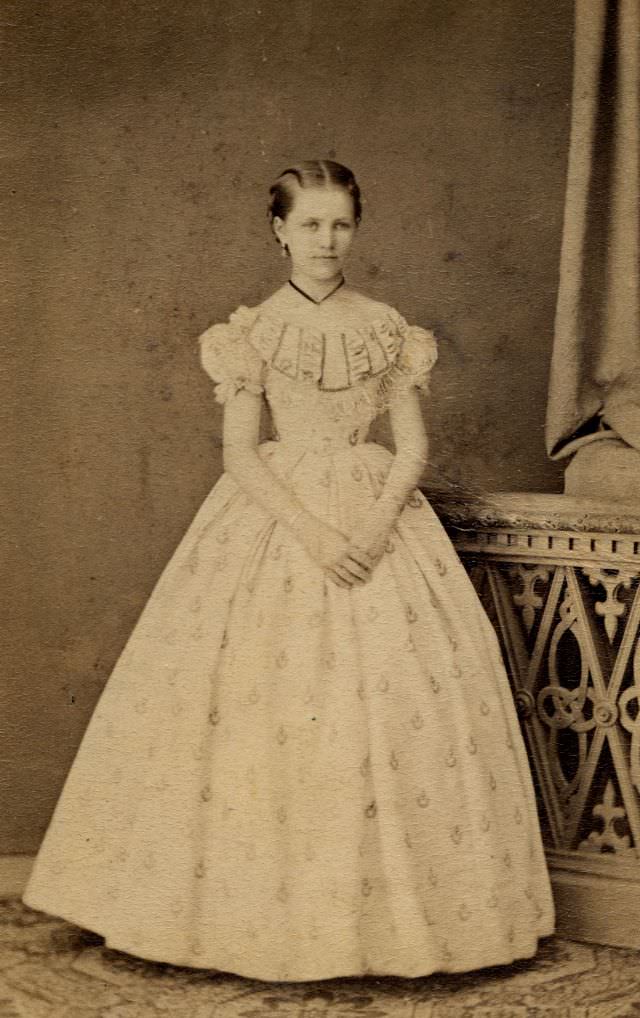
Poised in a studio setting, a young girl stands with her hands gently folded, framed by a plain backdrop and the edge of an ornate railing or balustrade. The careful posture and steady gaze speak to the formality of Victorian portrait photography, when even children were arranged to convey composure and respectability. Soft, even lighting and the uncluttered surroundings keep attention on her clothing—exactly where a viewer interested in 1860s fashion and culture would linger.
Her dress reflects the decade’s taste for a wide, bell-shaped silhouette, likely supported by layers beneath to create that distinctive fullness. The bodice is fitted and modest, with short puffed sleeves and a high neckline, while a broad, ruffled collar or bertha-style trim adds decorative emphasis across the shoulders and chest. Subtle patterning on the skirt and the crisp structure of the fabric hint at careful tailoring and the importance placed on presenting girls in refined, “grown-up” styles.
Beyond aesthetics, the outfit offers a glimpse into Victorian ideas about childhood, class, and propriety—how clothing taught young wearers to embody restraint and polish. Details like the controlled volume of the skirt, the balanced ornament, and the tidy hair arrangement suggest a family investing in appearance as a social signal, whether for a keepsake, a milestone, or simple participation in modern portrait culture. For readers exploring Victorian girls fashion in the 1860s, the image becomes a small but vivid record of how fabric, fit, and formality shaped everyday identity.