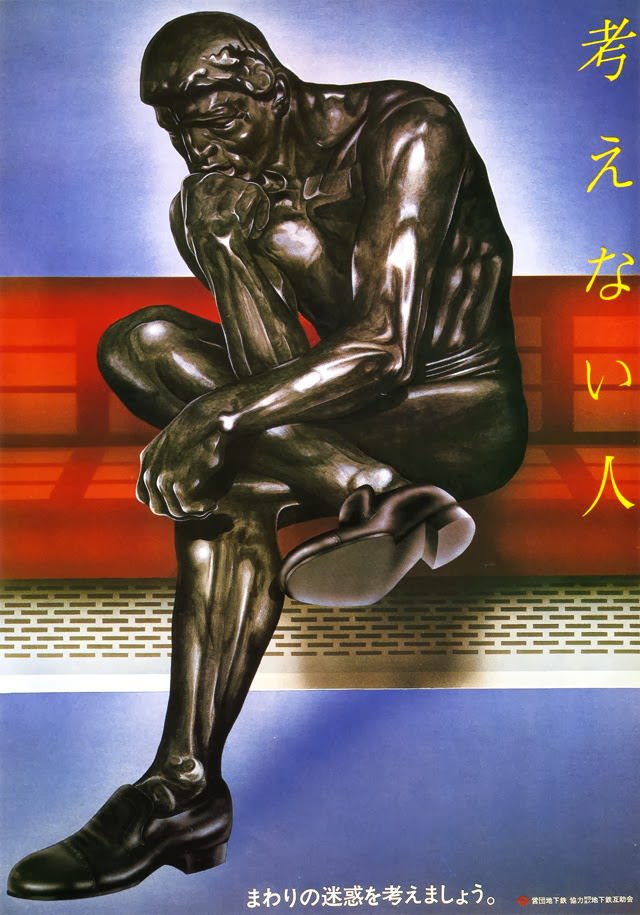
A dark, polished figure sits in a familiar pose of contemplation, yet the title “The Non-Thinker (May 1981)” nudges the viewer toward irony. Rendered with metallic highlights and deep shadows, the man’s bowed head and clenched hand suggest inward focus, while the sleek shoes and sculptural musculature push the image into the realm of poster art rather than straightforward realism.
Behind him, bold horizontal bands of red and blue frame the body like a stage set, and a patterned strip near the bottom adds a decorative, almost architectural rhythm. Along the right edge, vertical Japanese text reads 「考えない人」—literally “a person who doesn’t think”—reinforcing the tension between the iconic “thinking” posture and the message of refusal, fatigue, or deliberate disengagement. The glossy treatment makes the figure look statue-like, as if thought itself has been cast in metal and then interrupted.
As an early-1980s artwork, the piece feels designed for attention: graphic color blocks, crisp lettering, and a central image that invites interpretation at a glance. For readers searching for Japanese poster design, 1981 art prints, or conceptual works that play with classical poses and modern commentary, “The Non-Thinker” offers a compact visual argument—one that asks whether stillness signals reflection, or something more complicated.