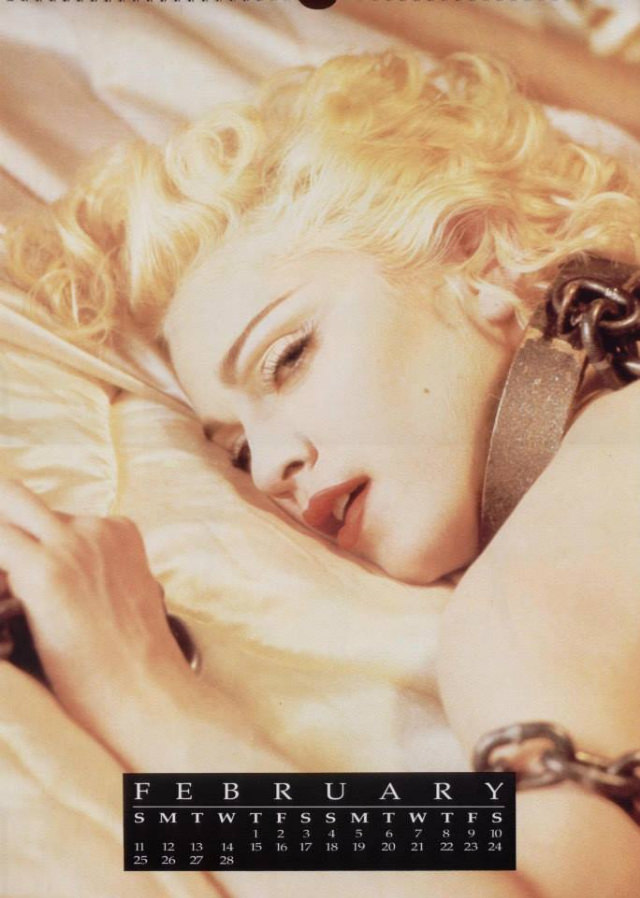
Soft, honeyed lighting washes over a platinum‑blonde pop icon reclining on a satin pillow, her gaze drifting downward as if caught between performance and private reverie. The close crop emphasizes porcelain skin, arched brows, and deep lipstick, while the glossy styling leans into the glamorous, editorial mood that defined so much 1990s celebrity imagery. Along the bottom, the bold “FEBRUARY” grid anchors the composition in unmistakable calendar form, turning a fashion photograph into something meant to be lived with day after day.
A thick metal chain and cuff, staged like high-fashion hardware, adds a provocative edge that echoes the era’s fascination with boundary-pushing pop culture and eroticized couture. The contrast between soft bedding and hard steel creates the tension that made official merchandise feel like more than souvenirs—these calendars doubled as statement pieces on bedroom walls and backstage doors. Even without a specific date printed large, the typography and styling signal the 1990s appetite for dramatic, collectible visual branding.
Madonna’s official calendars from that decade worked as mini time capsules, blending fashion photography, persona-building, and fan intimacy in a single monthly reveal. Each page functioned like a curated editorial spread, circulating iconic looks and attitudes far beyond magazines and music videos. For fashion and culture history, this kind of calendar image captures how pop stardom became a lifestyle artifact—part décor, part fandom, and part marketing machine.