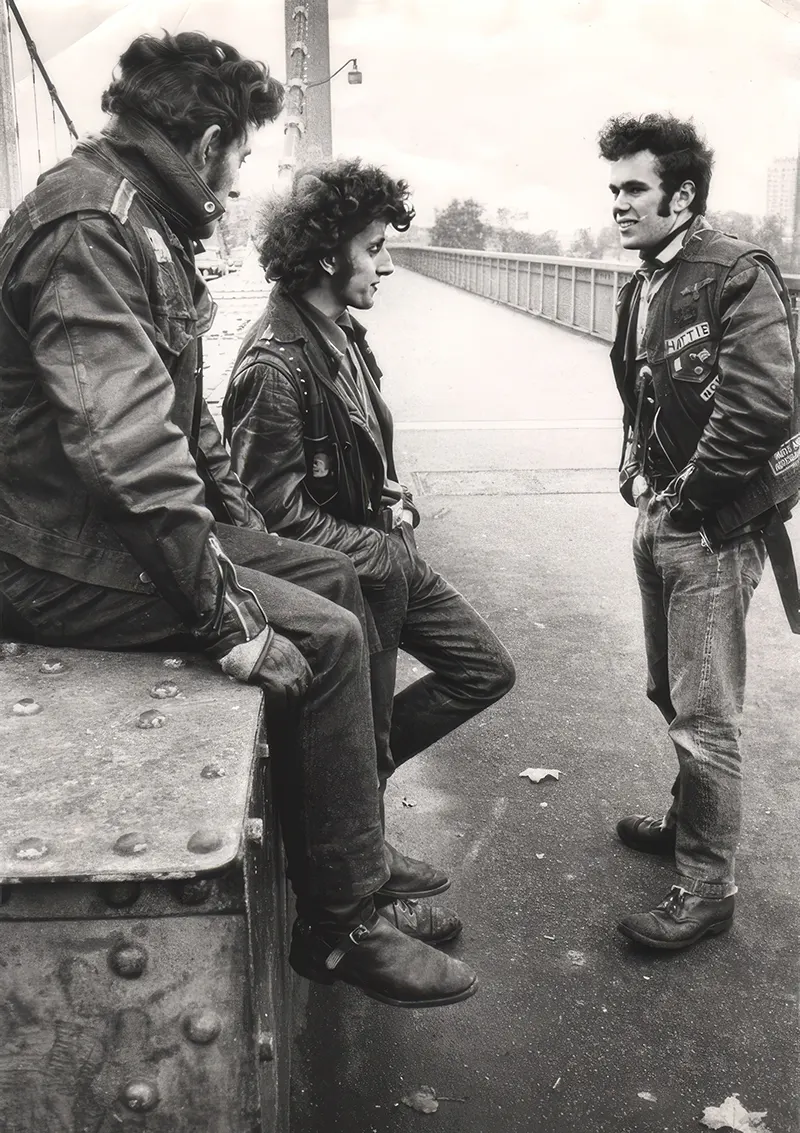
Leather jackets and heavy boots set the tone as three rockers linger on Chelsea Bridge, turning a stretch of steel and pavement into a meeting place. Two perch on the riveted structure, cigarette-in-hand nonchalance in their posture, while the third stands squarely facing them, hands in pockets, caught mid-conversation. The bridge’s long rail line recedes into the distance, an urban runway that frames their silhouettes and makes their style the central subject.
Close details speak the language of the rocker scene: worn denim, zip-front leathers, and club patches that hint at allegiance, rides, and weekend miles. Their hair is thick and untamed, a deliberate contrast to the sharper, cleaner look associated with their youth-culture rivals, the Mods. Scuffed footwear and creased sleeves suggest use rather than costume, fashion shaped by the road and reinforced by ritual.
Beyond the trio, the London skyline blurs into a pale backdrop, leaving the viewer with a focused study of attitude and identity. The photograph works as both street portrait and cultural document, capturing how 1960s fashion and music tribes marked themselves out in public space. In its casual stance and candid energy, “Three rockers on Chelsea Bridge” preserves a small, telling moment from the style wars era—when belonging could be read in a jacket seam, a badge, or the way someone leaned on a bridge.