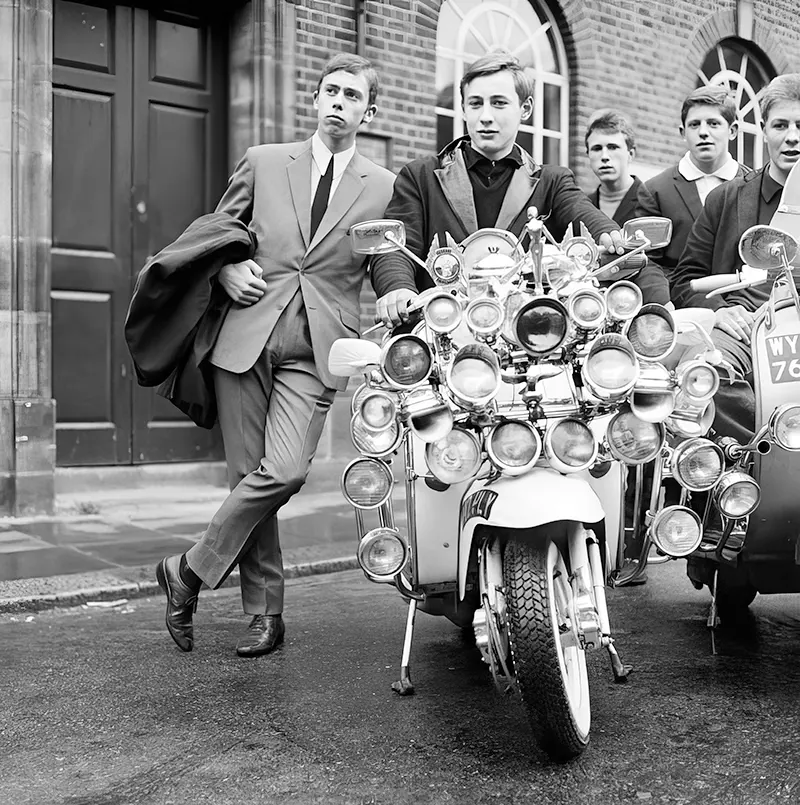
Outside a brick-fronted building in Peckham, a small knot of young Mods strike practiced poses, their tailoring as sharp as their attitudes. One leans back in a close-cut suit and narrow tie, coat slung over his arm, while others crowd in behind with the cool, unsmiling confidence that defined modern youth culture in 1964. The scene reads like a street-corner manifesto: elegance, restraint, and a quiet challenge to anyone who didn’t understand the look.
At the center sits the real showpiece, a modified scooter transformed into rolling spectacle, its front bristling with an extravagant constellation of lamps and polished chrome. Multiple mirrors and auxiliary lights turn the machine into a mobile display cabinet, reflecting the era’s obsession with customization and immaculate presentation. Parkas and smart jackets mingle around the handlebars, hinting at the practical uniform worn to protect those prized suits on the ride across south London.
Tension and pride share the frame, capturing the “style wars” energy that often set Mods apart from rival subcultures while binding them tightly to one another. These scooters weren’t merely transport; they were statements of taste, engineering tinkering, and weekend freedom, photographed at a moment when British fashion and street culture were remaking the meaning of youth. In this Peckham snapshot, the 1960s arrive not as nostalgia but as lived experience—pressed wool, gleaming metal, and a public performance of belonging.