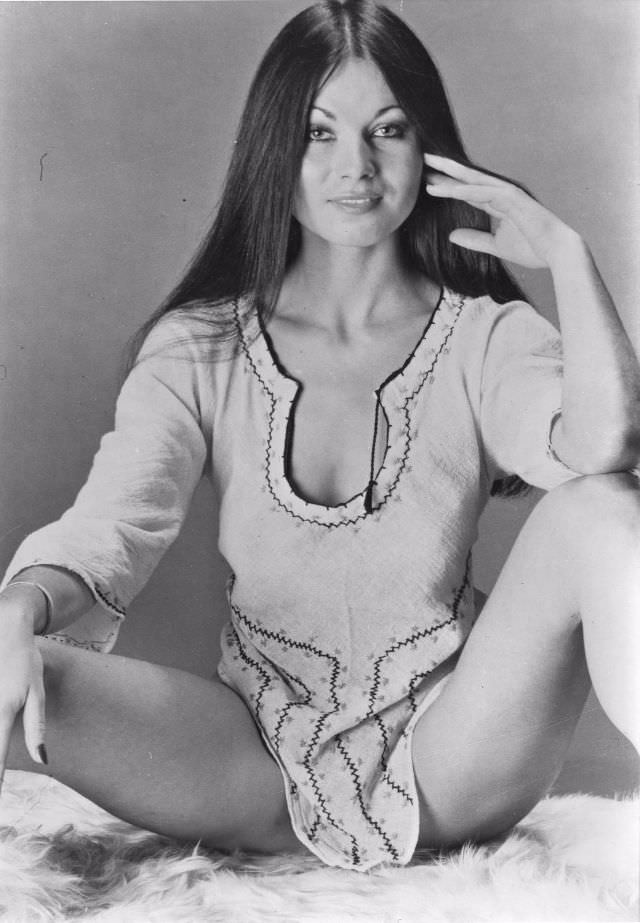
Long, centre-parted hair falls in a sleek curtain as the sitter meets the lens with an unforced, self-possessed gaze, the kind of directness that defined so much late-1960s and 1970s fashion imagery. She’s posed low to the ground on a soft surface, one hand lifted near her face, creating a relaxed studio intimacy that feels closer to youth-culture portraiture than to formal society photography. The monochrome tones sharpen every contrast—dark hair against pale fabric, smooth skin against the textured backdrop—giving the scene a clean, editorial clarity.
Brutus Fashion’s journey through British style is echoed here in the era’s shifting ideals: less stiffness, more personal attitude, and a growing confidence in the body as part of everyday design. The tunic-like garment, with its decorative stitched edging and flowing shape, suggests the period’s affection for craft details and easy silhouettes—clothes meant to move, lounge, and live in rather than simply impress. Even without visible street context, the look evokes the broader 60s–70s blend of bohemian ease and modern polish that magazines, boutiques, and subcultures carried into the mainstream.
Quietly, the photograph also speaks to fashion as culture, not just clothing: a moment when posing itself became looser, more conversational, and more expressive of individual identity. The soft lighting and uncluttered setting place full attention on style cues—hair, neckline, texture, and attitude—making it a useful visual reference for anyone exploring vintage British fashion, retro beauty trends, or the aesthetics of 1970s editorial photography. As part of a broader archive, it reads like a small, telling chapter in the story of how Britain dressed, looked, and imagined modernity in the decades after the swinging sixties.