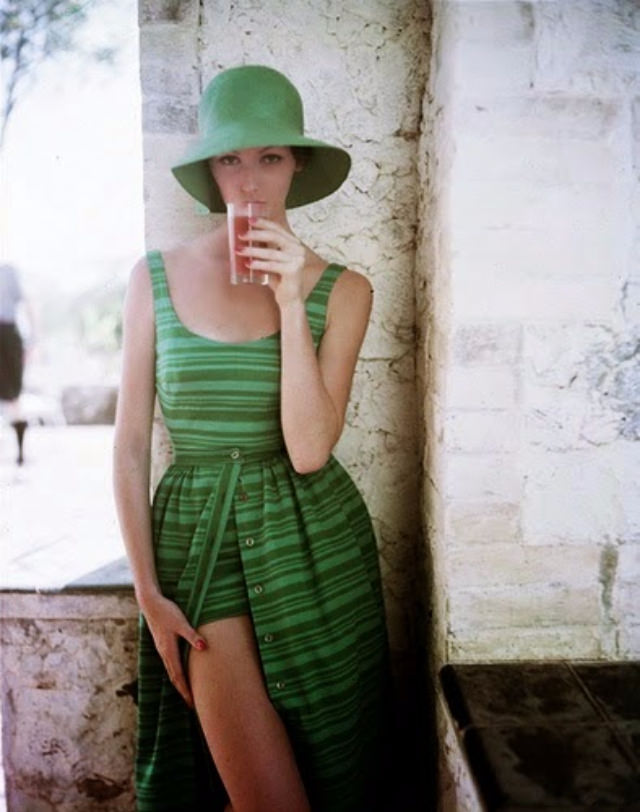
A cool green palette sets the mood: a model in a striped dress and wide-brim hat leans against rough stone, lifting a drink to her lips as if the camera has wandered into a private pause between takes. The styling feels deliberately effortless—bare shoulders, a cinched waist, and a skirt that parts to reveal a flash of leg—while the textured wall and shaded terrace suggest summer air and quiet luxury. Even without a named runway or labeled destination, the scene speaks the visual language of mid-century editorial fashion, where atmosphere mattered as much as the garments.
In the 1950s pages of Vogue and Harper’s Bazaar, the fashion photoshoot became a kind of theater, and the best frames were rarely about a straight-on pose. Here, the half-turned stance, the casual sip, and the softened color (reminiscent of early magazine reproduction) shift attention from pure display to storytelling. The outfit reads as both structured and relaxed, echoing an era that prized polished silhouettes yet increasingly flirted with leisurewear, resort settings, and the idea of a modern woman on the move.
What makes this image linger is its sense of craft—composition balanced by the vertical stonework, light held back into a gentle haze, and a gesture that feels observed rather than staged. For readers interested in fashion history, editorial photography, and mid-century culture, it’s a reminder that style magazines didn’t just document clothing; they manufactured desire through mood, location, and attitude. “Beyond the Pose” invites you to look closely at these choices and see how 1950s fashion imagery taught audiences how to inhabit elegance, not merely wear it.