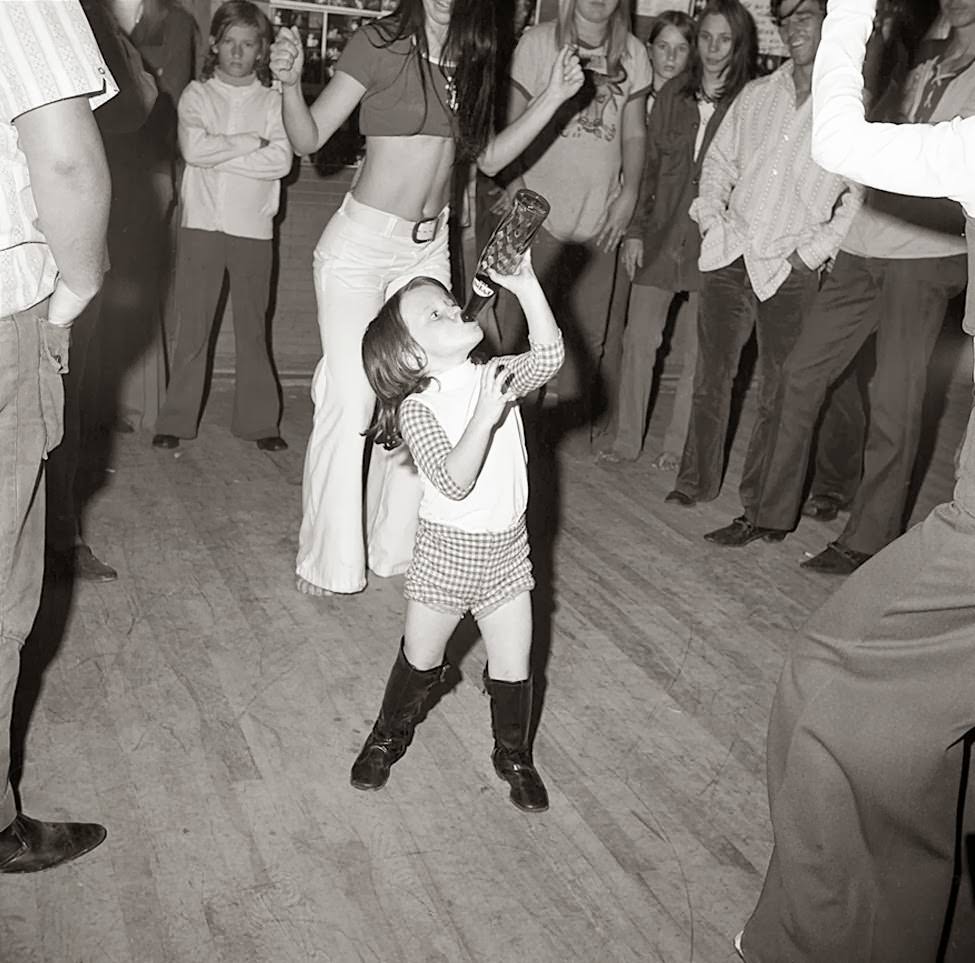
Under the bright rink lights, a small child steals the spotlight on a worn wooden floor, lifting a glass bottle to their lips while a loose circle of teens and adults looks on. Bell-bottoms, long hair, and patterned shirts frame the scene, turning a simple moment into a time capsule of early-1970s style and attitude. The Sweetheart Roller Skating Rink feels less like a sports venue here and more like a neighborhood stage where everyone—spectator and performer alike—plays a part.
Seven months in 1972 suggests a sustained look at youth culture, and this frame reads like an unguarded slice of it: playful, a little rebellious, and intensely social. The onlookers’ stances—arms folded, hands in pockets, half-smiles and sidelong attention—hint at the informal rules of the room, where confidence mattered as much as athletic skill. Even without skates in view, the setting carries the energy of roller skating nights: music nearby, friends clustered at the edges, and the constant possibility of something memorable happening in the middle.
For readers searching for 1972 roller rink history, Sweetheart Roller Skating Rink photos, or candid youth culture documentation, this image offers texture you can almost hear. It’s sports in the broadest sense—body, balance, bravado, and the social choreography that came with growing up in public. The result is an intimate, documentary glimpse of how recreation spaces shaped community, fashion, and identity long after the last lap around the floor.