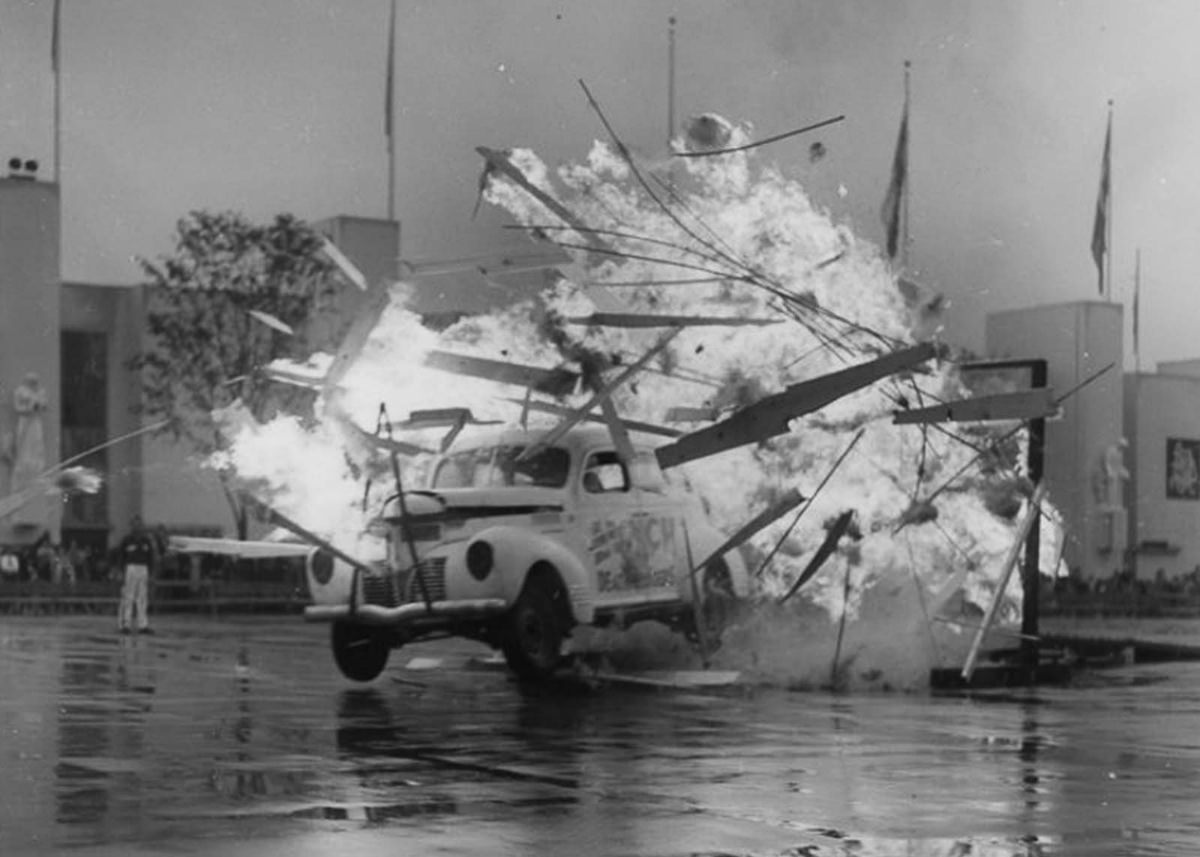
Steel, smoke, and splintered timbers erupt across a rain-slicked pavement as a prewar-style sedan plows into a barricade, frozen at the exact instant the stunt turns chaotic. The car’s rounded fenders and high roofline place it firmly in the era suggested by the title, while the spray of debris and flame underscores why audiences knew these performers by a name as ominous as “Death Dodgers.” In the background, a few onlookers and tall flagpoles hint at a fairground or stadium setting where danger was part of the draw.
Jimmie Lynch’s touring troupe built a kind of 1940s motorsport entertainment that prized spectacle over lap times, turning controlled collisions into crowd-pleasing drama. The photograph reads like a masterclass in timing: the front end lifts, the impact blossoms outward, and the wet ground mirrors the blast, amplifying the scene for anyone watching from behind the safety line. It’s a reminder that “sports” in this period could mean daredevil showmanship as much as competition, staged for maximum shock and applause.
Long before modern stunt regulations and crash barriers became standard, these performances traded on risk, mechanical ingenuity, and the public’s appetite for high-stakes thrills. Details like the makeshift wooden structure, the open-air venue, and the sheer volume of flying fragments evoke a traveling show atmosphere—part carnival, part automotive theater. For readers searching vintage motorsport history, daredevil car stunts, or 1940s Americana, this image offers an unforgettable glimpse into a louder, rougher chapter of popular entertainment.