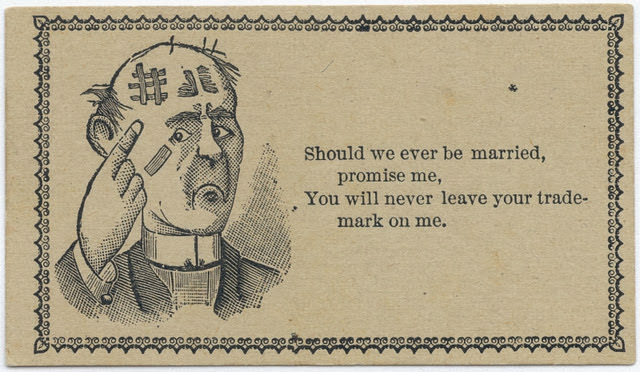
A stern-looking gentleman, face crisscrossed with bandages and little “marks,” stares out from an ornate bordered card while raising a hand as if to make a point. The joke lands in the printed caption beside him: “Should we ever be married, promise me, you will never leave your trade-mark on me.” With one absurd image and a single line of text, the card turns everyday worries about courtship into a punchline—perfect for the era’s taste for quick, shareable wit.
Humorous acquaintance cards like this were the 19th century’s social icebreakers, pocket-sized conversation starters meant to be handed over with a smile. The exaggerated injuries and the sly “trade-mark” pun hint at playful anxieties about commitment, reputation, and what it means to be “marked” by another person—emotionally or, in the gag’s case, literally. Even the decorative frame contributes to the charm, dressing up a ridiculous scenario in the respectable visual language of formal stationery.
For readers interested in Victorian humor, ephemera, and the history of flirting before texting, this artifact is a small marvel of social storytelling. It shows how a simple printed card could carry personality, tease boundaries, and invite a response without requiring a lengthy introduction. Seen today, it’s both a funny antique and a reminder that awkward first impressions—and the clever jokes we use to soften them—have always been part of human connection.