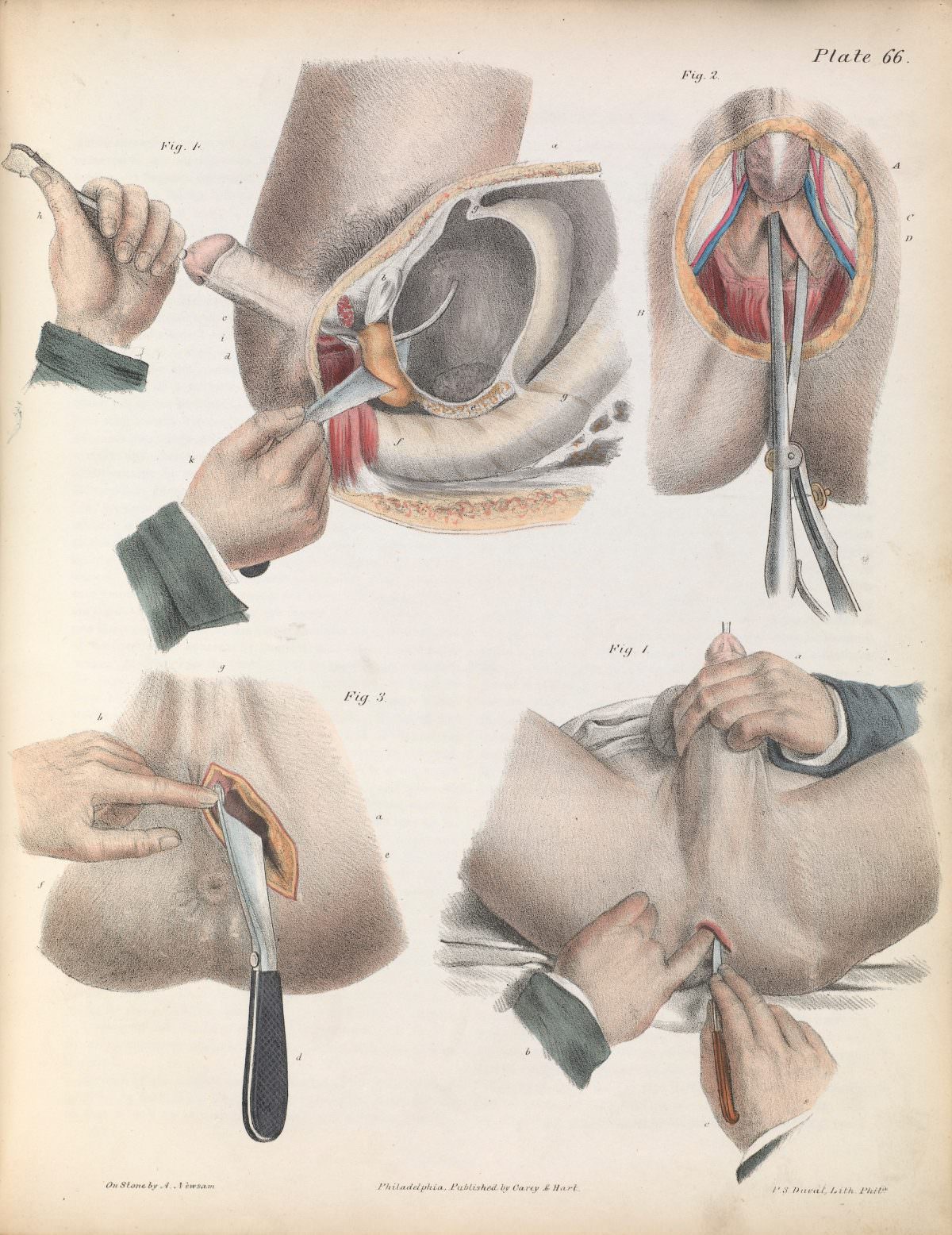
Plate LXVI lays out a surgical technique for lithotomy with the calm precision of a teaching atlas, balancing clinical clarity with the crafted touch of hand-colored medical illustration. Multiple figures guide the eye from the surgeon’s grip to the patient’s anatomy, using cross-sections and careful shading to make hidden structures legible. Numbered labels and figure notes reinforce that this was designed for study, not spectacle, turning the page into a lesson in operative anatomy.
In the larger central view, instruments are shown entering the body along a controlled path, with surrounding tissues rendered in layered tones to distinguish muscle, membrane, and the operative field. A separate figure focuses on the opening and the placement of long metal tools, emphasizing alignment and access—details crucial to a procedure historically associated with the removal of bladder stones. The artist’s decision to isolate steps across panels reflects how surgical knowledge was transmitted: sequential, diagrammed, and meant to be re-enacted.
Printed as “Plate 66,” this artwork sits at the intersection of early medical publishing and surgical education, where images carried authority in an era before photography became common in clinical documentation. For readers interested in the history of medicine, urology, or the evolution of operative techniques, the plate offers a vivid window into how surgeons learned their craft from engraved and lithographed atlases. It’s a reminder that behind every modern procedure lies a long tradition of drawn instruction, refined through generations of practice and print.