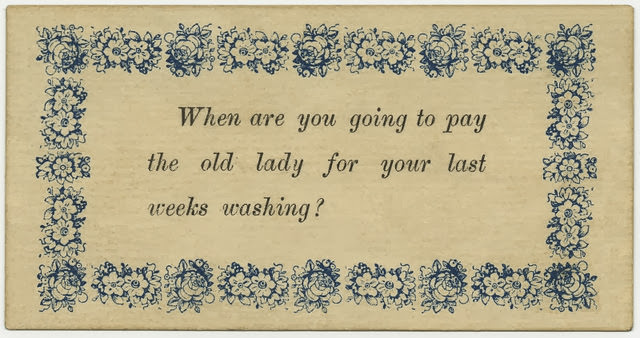
A delicate floral border frames a surprisingly blunt question: “When are you going to pay the old lady for your last weeks washing?” The contrast is the joke, turning a polite-looking card into a cheeky social prod that would have landed with a grin in a drawing room or at a bustling gathering. As an example of humorous acquaintance cards, it hints at a time when printed wit helped strangers find common ground without risking a truly awkward opening line.
Behind the humor sits a small snapshot of everyday life, where laundry, credit, and reputation were familiar concerns. The card’s wording feels like mock-scolding delivered on behalf of an “old lady,” suggesting a playful nudge about responsibility while still keeping the tone light enough for friendly exchange. In the world of 19th-century humor, teasing could be a safe way to test someone’s temperament—how they reacted mattered as much as the message itself.
For readers fascinated by Victorian-era ephemera, this piece also shows how typography and ornament carried their own kind of theater. That decorative frame promises refinement, yet the text undercuts it, making the punchline sharper and more memorable. Whether you’re researching antique social customs, collecting novelty stationery, or simply enjoying old-fashioned comedy, this funny acquaintance card is a quick lesson in the art of breaking the ice with ink and audacity.