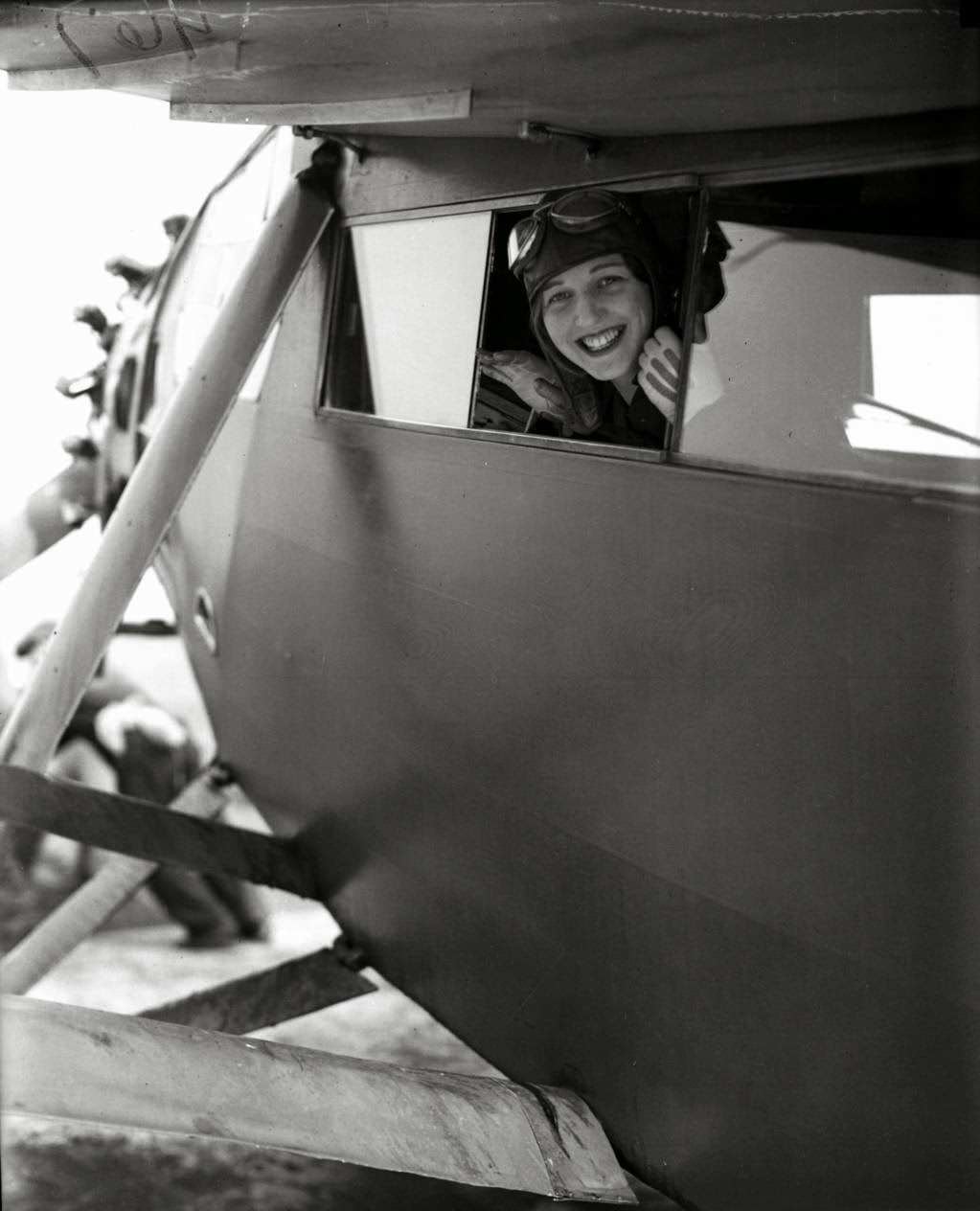
Leaning out of an airplane’s small window, Ella Van Hueson flashes an easy, confident smile, her leather flying cap and goggles signaling the modern thrill of the era. The tight framing pulls you into the cockpit’s intimate space—metal skin, struts, and shadows—where glamour meets machinery. It’s a candid sort of poise that feels less like a posed studio portrait and more like a snapshot of a new kind of celebrity.
Her story, as the title notes, runs through the International Pageant of Pulchritude in Galveston, Texas, where she was selected from 32 contestants representing various parts of the United States and given the title “Beauty Queen of the United States,” before becoming Miss Universe in 1928. Beauty contests in the late 1920s were becoming national spectacles, blending fashion, publicity, and the promise of opportunity into a single headline-friendly narrative. In that world, a winner’s image traveled fast—through newspapers, postcards, and promotional photos designed to make the public feel as if they’d met her.
What makes this photograph linger is how it ties pageant culture to the wider fascination with speed and modern life: aviation, travel, and the daring aesthetics of the flapper age. The smile reads as practiced yet genuine, a public face ready for cameras, crowds, and the expanding media machine that turned “most beautiful” into a brand. For readers drawn to 1920s fashion and culture, this moment offers a vivid reminder of how quickly American ideals of beauty, confidence, and modernity were being rewritten in the air as much as on the stage.