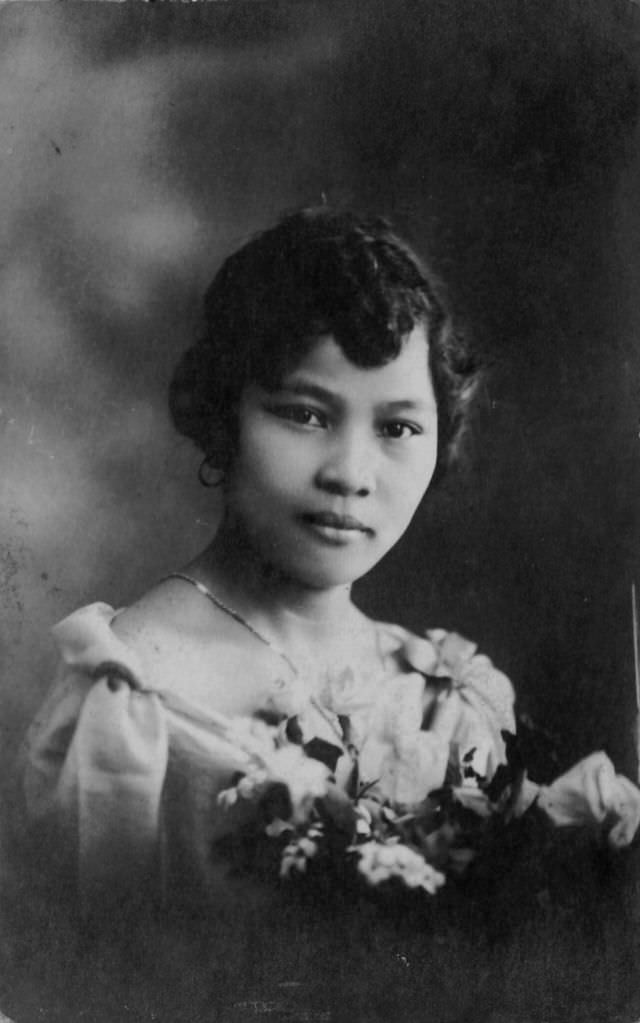
Soft studio lighting frames a young Manila woman as she meets the camera with a steady, thoughtful gaze, her face emerging from a velvety, dark backdrop. The portrait’s gentle focus and tonal gradations—bright skin against shadowed background—give it a quiet intimacy typical of early 1900s photographic practice, when sitters were composed carefully and stillness was part of the craft. A bouquet rests in her hands, adding texture and symbolism, as if the photographer wanted to balance formality with tenderness.
Fashion details speak volumes: a light dress with a wide neckline and softly gathered sleeves, paired with a delicate chain at the throat, suggests the era’s preference for romantic silhouettes and refined simplicity. Her short, waved hairstyle—neatly arranged and modern in spirit—signals changing tastes among urban women and the growing visibility of new social identities in Manila. Even without a visible setting, the studio portrait itself is a cultural marker, reflecting access to photography and the importance of personal presentation.
Viewed today, the image reads as more than a pretty likeness; it is a small window into Manila’s early 20th-century fashion and culture, where tradition, modernity, and aspiration often met in a single frame. The flowers, the poised posture, and the unembellished background direct attention to the sitter’s presence rather than props, inviting viewers to imagine the everyday stories behind formal portraits. For anyone interested in vintage Filipino photography, women’s history, or turn-of-the-century style, this portrait offers a striking, searchable glimpse of the period’s elegance and evolving sensibilities.