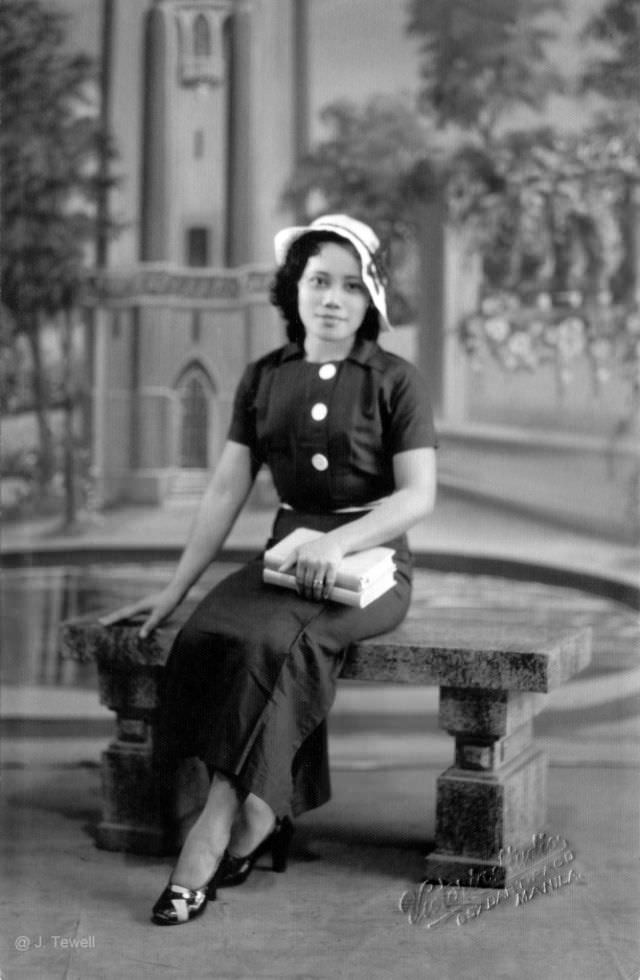
Poised on a stone bench, a young Manila lady meets the camera with a calm, steady gaze, her posture both relaxed and self-assured. She wears a dark, fitted dress punctuated by bold light buttons, paired with polished heels that catch the studio light, while a soft hat frames her wavy hair and adds a modern note to the look. In her lap rests a small stack of books or neatly wrapped volumes, a prop that hints at education, aspiration, and the cultivated image many portrait sitters wished to project.
Behind her, the painted studio backdrop suggests an elegant urban setting—arched architecture, a tower-like structure, and garden foliage—designed to place the sitter within an idealized world of refinement. The careful arrangement of hands, the crisp line of the hem, and the gentle contrast of fabric tones reveal the photographer’s attention to composition as much as the subject’s sense of style. Even without a named location visible, the atmosphere aligns closely with early 1900s portrait culture in Manila, where studios blended theatrical scenery with contemporary fashion.
Fashion and culture intertwine here in the details: the hat’s playful tilt, the streamlined silhouette, and the practical yet stylish footwear signal changing tastes and a growing cosmopolitan influence. At the same time, the modest cut and composed demeanor reflect the era’s expectations of respectability, especially in formal photographic keepsakes. As a vintage portrait, it offers more than a pretty outfit—it opens a window onto how Manila women of the period chose to be seen, remembered, and celebrated.