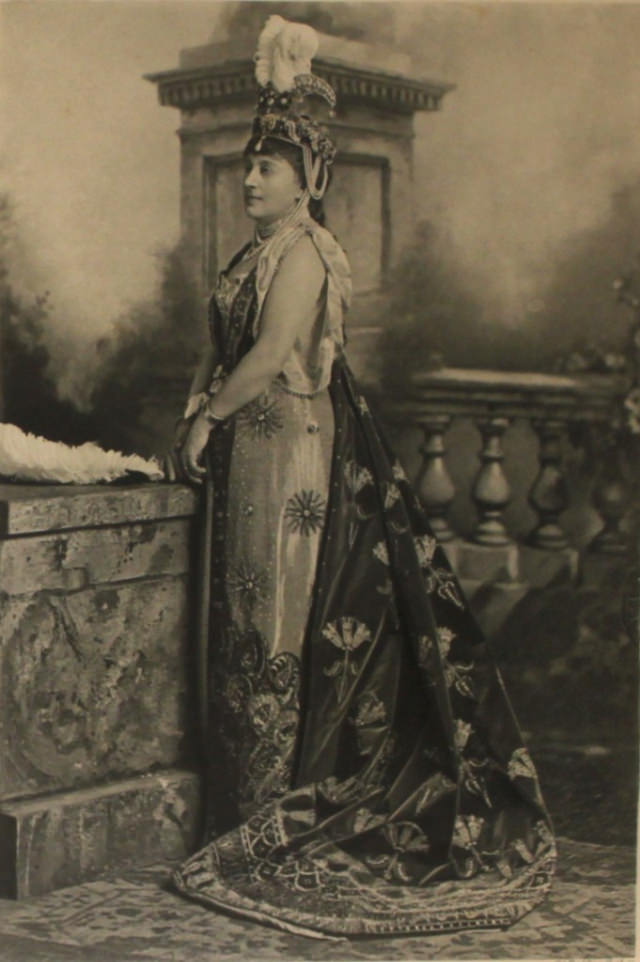
Poised in profile beside a stone balustrade, the Duchess of Devonshire appears in the guise of Zenobia, Queen of Palmyra, her posture calm and self-possessed as the heavy train of her costume spills across the patterned floor. An elaborate headdress rises above her coiffure, crowned with a tall plume that lends height and theatrical authority. The studio backdrop—classical architecture softened by painterly haze—frames her like a figure from antiquity, translated into late‑Victorian spectacle.
Opulent details reward a closer look: the gown is sprinkled with starburst motifs, and the cloak-like drapery behind her is densely embroidered with stylized florals and ornate borders. Bracelets glint at her wrists, and layered fabrics suggest the era’s fascination with “ancient” luxury rendered through contemporary couture techniques. Even without color, the photograph communicates texture—velvet-like depth, metallic thread, and the disciplined weight of formal dress designed to impress under gaslight.
Fancy-dress society balls at the end of the nineteenth century were not mere amusements but carefully staged displays of wealth, taste, and historical imagination, and Zenobia offered a particularly powerful role to inhabit. The choice signals an appetite for romanticized classical themes, filtered through the period’s love of pageantry and costume design. As a piece of fashion and culture, this portrait endures as both a record of elite performance and a vivid example of how history was worn—quite literally—as an identity for a night.