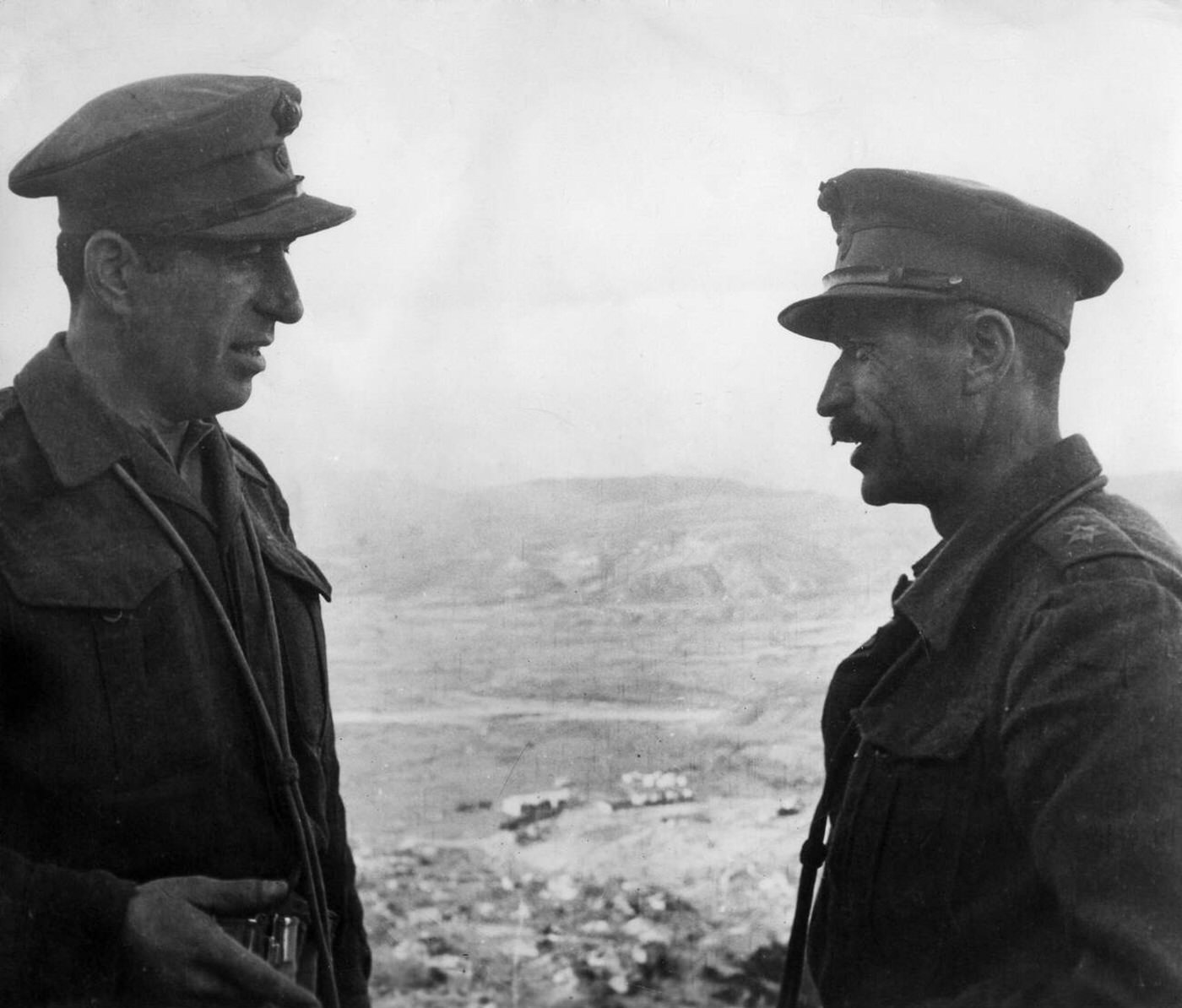
Against a pale, open sky, two uniformed officers stand face to face, their peaked caps and heavy field jackets framing a quiet moment of conversation after violence has passed. The background falls away into a blurred, rocky landscape, suggesting a harsh frontier terrain where distance and exposure are as pressing as any enemy. One man’s moustache and the set of both profiles give the scene a documentary sharpness, as if the photographer caught a breath between reports, orders, and the next movement.
Set in Konitsa during the Greek Civil War in 1947, the photograph carries the weight of a conflict often remembered through tactics and politics but lived through weather, fatigue, and close-quarters decisions. The officers’ posture feels measured rather than triumphant, hinting at the uncertainty that followed “the fightings” and the need to quickly assess what remained—positions held, losses counted, routes watched. Even without visible weapons or action, the tension of command lingers in the way they hold their ground and meet each other’s gaze.
For readers exploring Greek Civil War history, images like this provide a grounded entry point into the period’s daily reality: leadership conducted in the open air, amid rugged hills, with little separation between front line and countryside. The composition—two figures in the foreground with a wide, muted vista behind—underscores how individual lives and decisions were set against a larger, contested landscape. As a historical photo, it invites slower looking and careful context, reminding us that aftermath can be as defining as battle itself.