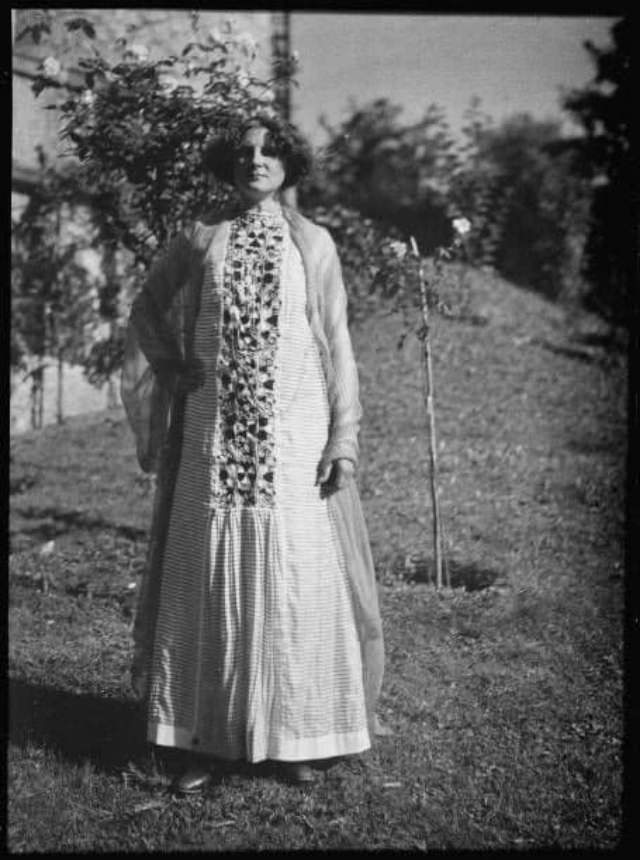
Framed by a garden slope and soft, dappled light, a poised woman stands outdoors in a long, flowing dress that falls in relaxed lines to the ground. The garment’s vertical paneling and patterned front create a striking, modern rhythm, while a sheer, draped layer over her shoulders adds an airy finish. Even in the photograph’s gentle blur, the silhouette reads as purposeful—less about tight tailoring and more about movement, comfort, and presence.
Emilie Flöge’s fashion career is often discussed through the lens of artistic modernism, and images like this help explain why her work still draws searches from students of early 20th-century style. The overall look suggests a reform-minded approach to women’s clothing, favoring looser construction and decorative surface over the rigid constraints of earlier decades. Set against a natural backdrop rather than a formal studio, the styling feels lived-in, as if fashion here is meant to accompany real life rather than stage it.
Rare photos are invaluable for tracing how a designer’s ideas translated from sketches and salons into everyday wear, and this scene offers a tactile glimpse of that transition. The interplay of patterned fabric, light outer layer, and full-length skirt speaks to a wardrobe that balanced artistry with practicality—an enduring theme in Fashion & Culture history. For readers exploring Emilie Flöge, Vienna modernism, or the evolution of women’s dress, the image functions as both documentary evidence and visual inspiration.