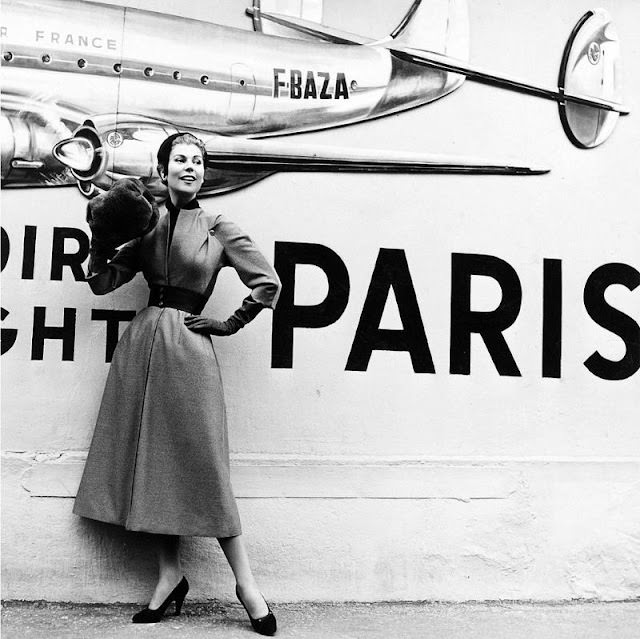
Leaning with easy confidence against a wall-sized “PARIS” advertisement, Stella poses like a traveler caught between destinations and dreams. A streamlined airplane graphic looms above her shoulder, its metal contours and registration-style markings underscoring the era’s fascination with speed and modern design. She holds a hat at her side, chin lifted, as if the next gate call might be for her.
Her outfit reads as early-1950s elegance: a tailored, long-sleeved dress cinched at the waist with a dark belt, the skirt falling in a full, mid-calf sweep that flatters the poised stance. Gloves and heels sharpen the silhouette, turning a casual street-side moment into a fashion statement. The smile isn’t coy; it’s assured, the kind of expression that suggests she knows the camera is there and intends to meet it on her own terms.
Air travel and couture share the frame, linking postwar optimism with the burgeoning glamour of international culture. The bold typography and aviation imagery function like a stage set, making “Paris” less a place than a promise—of style, reinvention, and a wider world just beyond the horizon. Seen through that lens, “Stella, circa 1953” feels like a snapshot of modeling’s mid-century momentum, when modern femininity was pictured in motion, ready to depart.