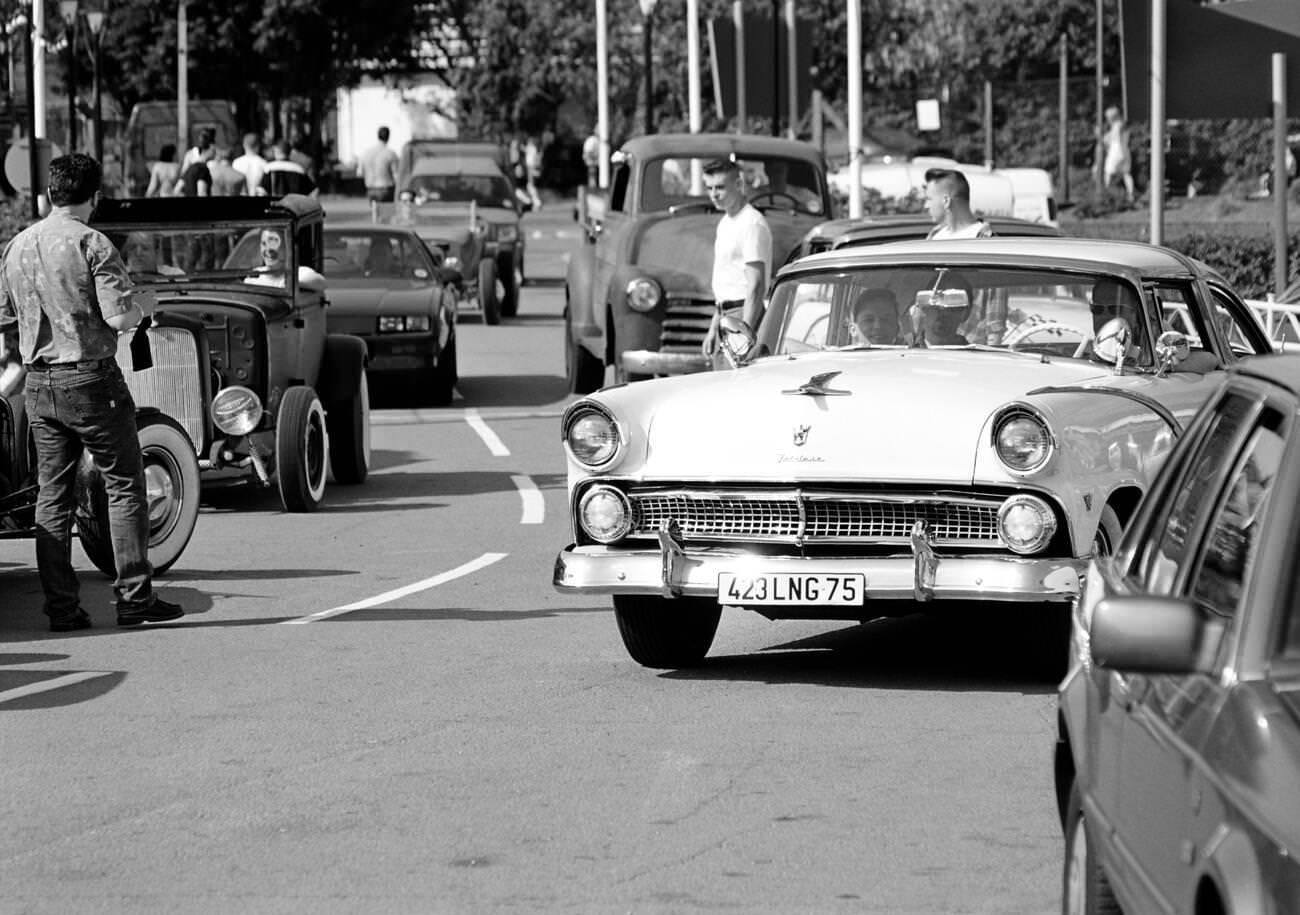
Morning traffic becomes a parade as rock ’n’ roll fans roll into the Hemsby music festival in 1995, their arrival announced as much by chrome and engine lines as by any poster or ticket stub. A bright 1950s-style saloon leads the frame, its grille and hood ornament gleaming while passengers lean forward behind the windscreen, already half-immersed in the weekend’s nostalgia. Behind it, more period vehicles queue up—hot-rod shapes and older trucks mixing with everyday cars—turning an ordinary road into a slow-moving procession of vintage enthusiasm.
Along the kerb, casually dressed onlookers and festival-goers stand with hands in pockets and bottles at their sides, watching the convoy inch ahead. The scene feels communal rather than hurried: people chat across lanes, drivers glance out with the quiet pride of owners who have polished every panel, and the line of traffic stretches back toward trees and low buildings. Even without the music in earshot, the visual language is unmistakable—mid-century styling resurrected and shared in public, one car length at a time.
What makes this photograph resonate is how clearly it speaks to 1990s retro culture, when rockabilly and greaser aesthetics found new life through festivals, car clubs, and weekend pilgrimages. The combination of classic cars, relaxed street fashion, and the simple ritual of “arriving” captures the social heart of the event: not only performances on stage, but the gathering itself as spectacle. For anyone searching the history of British rock ’n’ roll revival, Hemsby in 1995 reads here like a doorway into the era’s sound, style, and sense of belonging.