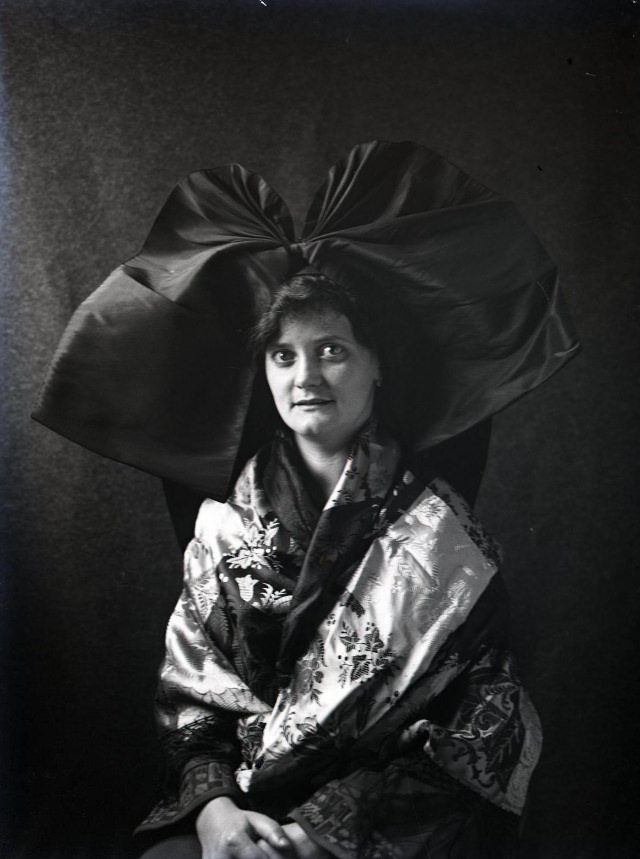
Set against a plain studio backdrop, an Alsatian woman faces the camera with a calm, direct gaze, her silhouette dominated by the region’s iconic oversized bow headdress. The dramatic, wing-like shape frames her face and draws attention to the careful arrangement of fabric, suggesting a formal portrait made to highlight traditional dress rather than everyday workwear. Soft lighting and gentle shadows give the scene a quiet intimacy while keeping every fold and edge of the headpiece clearly defined.
Her costume layers texture upon texture: a patterned shawl wrapped across the shoulders, richly embroidered fabric at the sleeves, and dark gloves that reinforce the sense of occasion. Floral motifs and contrasting tones create visual rhythm across the garments, offering a glimpse into early 20th-century Alsatian fashion where craftsmanship and regional identity were stitched into clothing. The overall effect is both dignified and theatrical, presenting folk attire as something proudly worn and carefully displayed.
Traditional Alsace costumes like this were more than decoration; they signaled community ties, cultural heritage, and sometimes social standing, especially when photographed in a studio setting. In the early 1900s, such portraits helped preserve local styles at a time when modern fashion and shifting borders challenged regional customs across Europe. For readers interested in historical fashion, French regional dress, and women’s cultural history, this image remains a striking reference point—timeless, elegant, and unmistakably Alsatian.