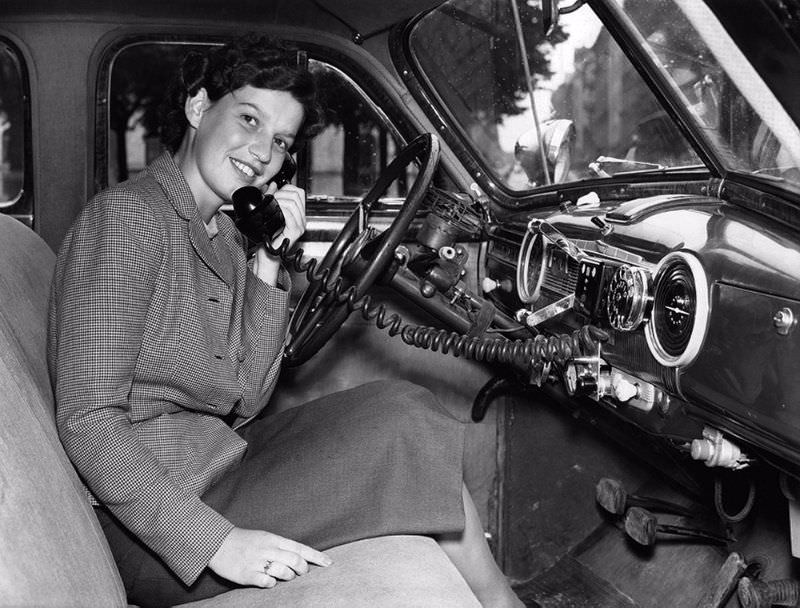
Leaning toward the steering wheel with an easy smile, a driver holds a hefty telephone handset to her ear while a coiled cord trails across the front seat. The car’s interior—broad bench seat, polished dashboard, and prominent knobs and gauges—frames the novelty: a wired in-car telephone setup that looks more like office equipment than anything meant for the road. It’s a striking snapshot of mid-century optimism, when mobility and modern communication were beginning to blur together.
Around 1950, the idea of making a call from inside an automobile suggested a future of constant connection, even if the reality was bulky hardware and limited coverage. The handset and cord hint at an early car phone system that relied on vehicle-mounted components rather than anything handheld, a reminder that “wireless” once required a surprising amount of wire. In an era when home telephones were often shared within households and businesses, having a phone in a car read as luxury, innovation, and status all at once.
For readers interested in inventions and everyday technology history, this photo offers a clear link between postwar consumer design and today’s always-on culture. It also underscores how quickly expectations change: what once demanded dedicated equipment bolted into a dashboard is now a pocket-sized routine. As a historical image of an in-car telephone circa 1950, it invites us to imagine the excitement—and the practical challenges—of talking on the move at the dawn of mobile communication.