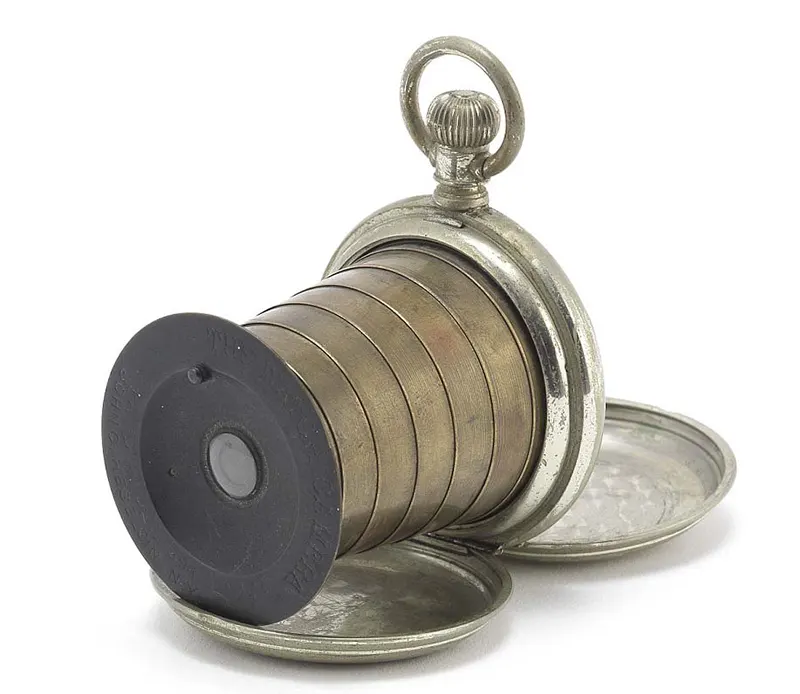
Pocket-sized ingenuity sits at the center of this curious object: a watch-like case that hides a small camera within. The metal body looks like a familiar timepiece at first glance, complete with a crown and loop, yet the front face is dominated by a dark plate with a tiny lens opening that gives away its true purpose. In an era when cameras were often bulky and conspicuous, this compact design promised something radically modern—photography that could travel unnoticed.
What makes the 1894 “watch camera” so fascinating is the way it blends everyday personal accessories with emerging photographic technology. The segmented, telescoping-looking barrel suggests a mechanism meant to extend quickly for use, then collapse back into a pocket-friendly form. Even without the drama of a street scene or studio portrait, the device itself tells a story about late-19th-century inventions: clever miniaturization, mechanical precision, and a growing appetite for capturing candid life outside formal settings.
The title’s emphasis on secrecy hints at the social tension that followed portable cameras wherever they appeared. Tools like this invited both wonder and worry—excitement about spontaneous snapshots, and anxiety about privacy long before the digital age. For readers interested in antique cameras, early surveillance gadgets, and the history of photography, the watch camera stands as a striking reminder that the desire to record the world discreetly is not a new impulse, merely one that keeps finding new forms.