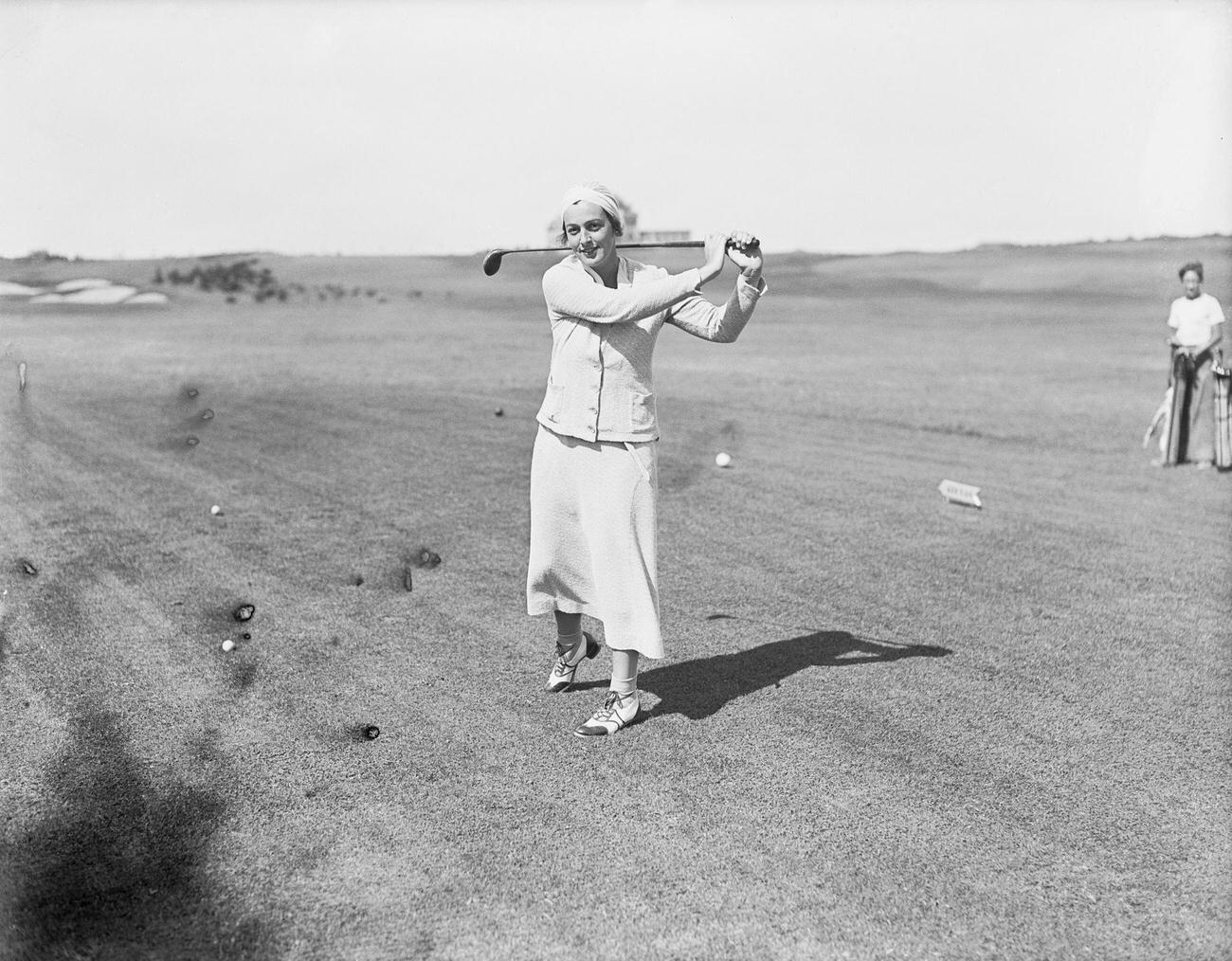
Mid-swing, Frances Budlong holds her golf club across her shoulders with the relaxed assurance of someone who knows the rhythm of the game. The open fairway stretches behind her under a bright sky, and the crisp contrast of the 1930s photograph draws the eye to the details of her attire—headscarf, cardigan, and long skirt—an unmistakable blend of sport and period style. In the distance, a figure and bag stand quietly to the right, reinforcing the calm, unhurried atmosphere of a day on the course.
Newport, Rhode Island, long associated with seaside leisure, provides an evocative setting for women’s golf in the early twentieth century, when athletic participation was expanding alongside changing expectations of public life and recreation. The scene speaks to a time when golfers navigated both the technical demands of the sport and the social codes of dress and decorum, shaping how the game was played and photographed. Even without a crowd or clubhouse in view, the image suggests a well-kept landscape made for summertime rounds.
Dated July 25, 1932, this snapshot offers more than a moment of sports history; it captures the everyday confidence that helped normalize women’s presence on the fairway. For readers searching for historical photos of women playing golf, early 20th-century athletics, or Newport Rhode Island history, Budlong’s poised follow-through becomes a small but telling archive of skill, fashion, and leisure. Seen today, the photograph invites us to linger on how a single swing can carry the texture of an era.