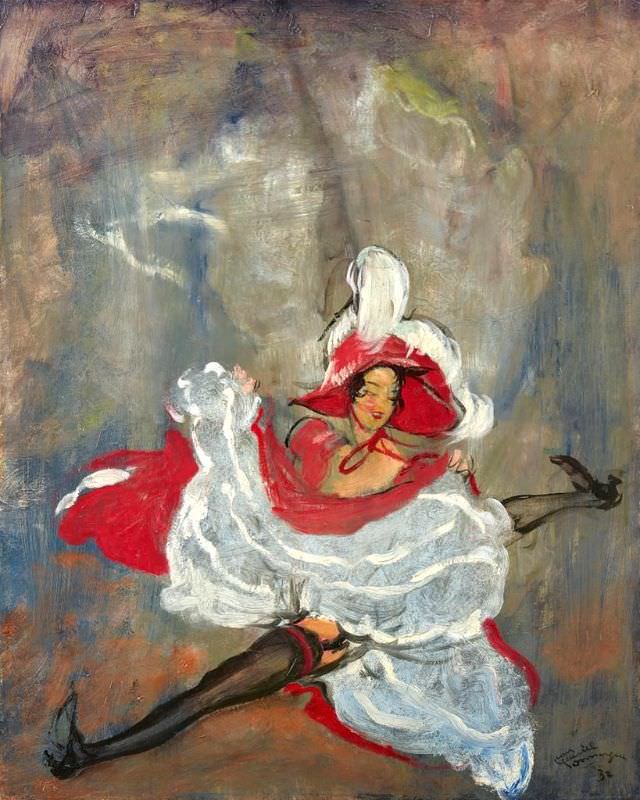
Grand Écart, 1932 places the viewer right at the edge of motion, where a dancer’s body opens into a dramatic split and the stage seems to blur around her. Thick, energetic brushwork turns fabric into a flurry—white ruffles and a vivid red skirt spiraling across the canvas—while dark stockings and sharp, angled shoes anchor the pose with a hint of theatrical bite. The figure’s face is only lightly defined, yet it carries a confident, almost playful expression that makes the performance feel immediate rather than distant.
Painted gesture matters as much as subject here, and the loose, smoky background keeps attention fixed on the sweep of limbs and costume. The composition reads like a single breath held mid-routine: one leg extended, the other bent, with the torso leaning back into the swirl of layered cloth. That contrast of softness and precision—billowing skirts against the clean line of a stretched leg—captures the allure of dance as both discipline and spectacle.
As an artwork dated 1932, Grand Écart resonates with the era’s appetite for modern entertainment and bold visual style, translating stage glamour into painterly shorthand. It’s a compelling choice for anyone searching for historical art, dance painting, or vintage performance imagery, because it evokes not just what a dancer looked like, but how the moment felt. Seen today, the piece still reads as a celebration of movement, costume, and the fleeting drama of a pose held long enough to become history.