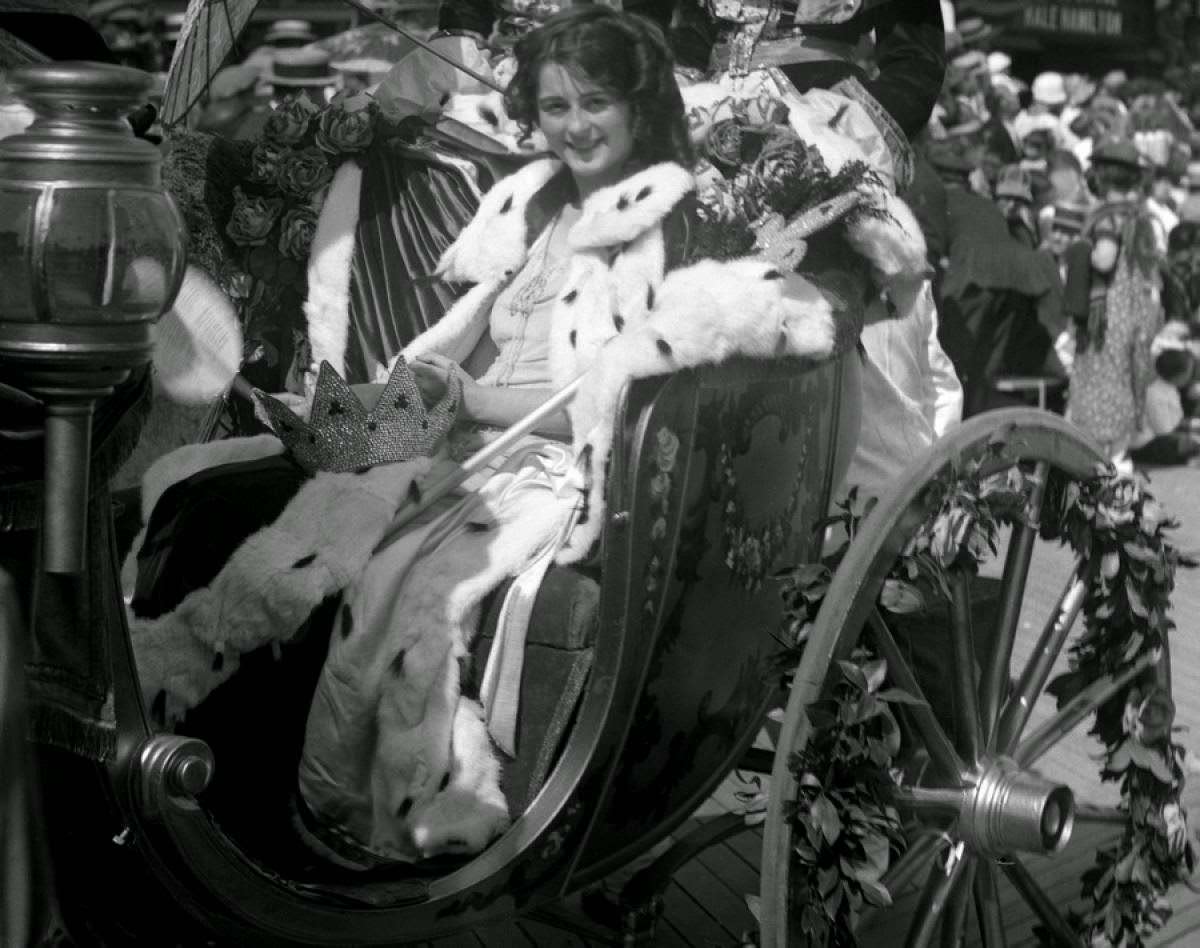
Draped in a regal, fur-trimmed wrap and seated high in a flowered rolling chair, Mary Katherine Campbell appears as the very embodiment of pageant-era glamour, her crown resting close at hand as if it were simply another accessory for the ride. The ornate carriage details—curving woodwork, polished fittings, and garlands—frame her poised smile, while a dense crowd blurs behind, turning the parade route into a living backdrop of summer spectatorship. Even in monochrome, the contrast of soft textiles, sparkling ornament, and bright daylight suggests the showmanship that made the early Miss America festivities a major attraction.
Atlantic City’s Rolling Chair Parade was more than a quaint boardwalk tradition; it functioned as public theater, a place where tourism, celebrity, and modern femininity met under the gaze of thousands. Campbell’s presence as Miss America 1923 ties the scene directly to the era when beauty pageants were becoming a national conversation, promoted with equal parts glitz and publicity savvy. The rolling chair itself—part leisure vehicle, part status symbol—signals the resort culture of the time, when being seen was as important as seeing the sea.
Details in dress and styling place the moment firmly in the early 1920s: the bobbed hair, the sleek lines of the gown, and the carefully staged aura of effortless elegance. Yet the photograph also hints at the grit beneath the glamour, with parade logistics, packed onlookers, and the practical reality of moving a celebrity through a crowded promenade. For readers interested in Miss America history, Atlantic City boardwalk culture, or 1920s fashion and leisure, this image offers a vivid snapshot of how spectacle was crafted—and consumed—in the modern age.