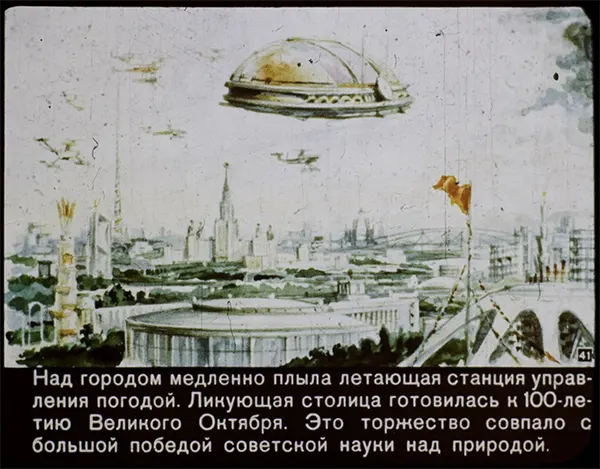
High above a sprawling city skyline, a disk-shaped “weather station” drifts like a calm, mechanical moon, while aircraft streak across the pale sky in neat formations. The scene carries the look of a mid-century illustrated print—part reportage, part prophecy—mixing monumental architecture with the promise of engineered skies. Along the bottom, bold Russian text anchors the spectacle in the language of public celebration and official narration, turning the heavens into a stage for civic pride.
Moscow is invoked in the title as the destination of this triumphant return, and the artwork leans hard into that idea of a capital ready to applaud its saviors. Below the hovering craft, crowds and city structures are rendered with quick, confident lines, as if the artist wanted the viewer to feel the scale of the event rather than linger on individual faces. The implication is clear: science has become a kind of guardianship, with “weather control powers” recast as heroic labor credited with saving hundreds of lives.
Soviet-era visual culture often framed technology as a collective victory, and this piece fits that tradition with its dramatic aerial perspective and celebratory tone. For readers interested in Moscow history, propaganda art, and the broader story of how meteorology and modern infrastructure were imagined, the image offers plenty to unpack. It’s less a literal document of weather engineering than a vivid artifact of belief—an age when the future was pictured as something that could be piloted, managed, and proudly paraded over the city.