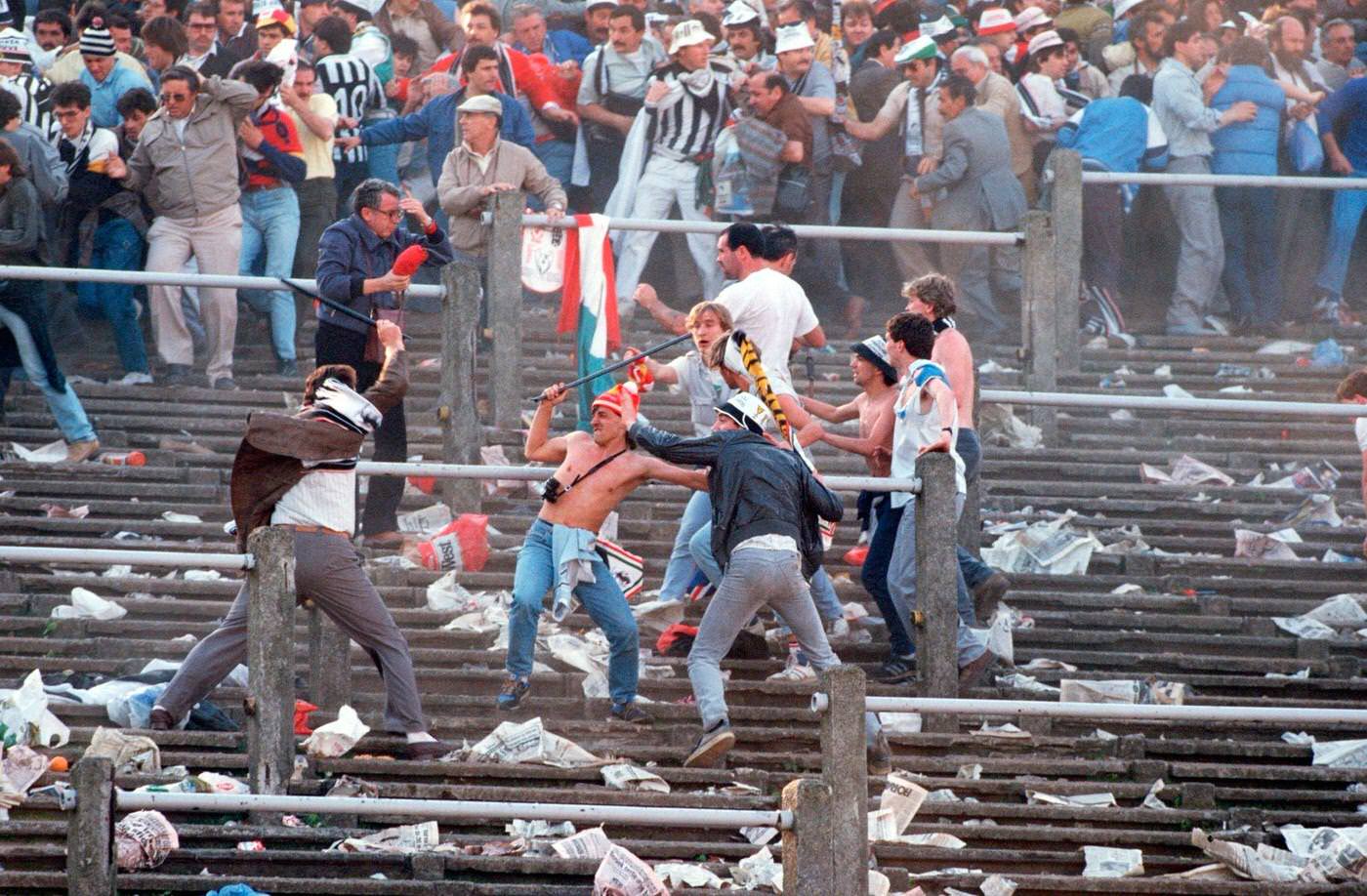
Chaos surges across the terraces at Heysel Stadium, where Juventus stripes mingle with anxious faces pressed against concrete barriers. In the foreground, men clutch poles and torn banners while others scramble up the steep steps, the ground littered with paper, clothing, and debris that hints at a crowd pushed past its limits. The scene is tense and raw, capturing the split second when a football final stops feeling like sport and starts feeling like survival.
Taken during the 1985 European Cup of Champions match between Juventus and FC Liverpool, the photograph speaks to the fragile architecture of crowd control in that era. You can read the panic in the motion—people craning backward, bodies turning, arms raised—not as celebration but as reflex. It’s a grim reminder that a stadium is more than a backdrop; its fences, terraces, and policing become part of the story when disaster strikes.
Remembered as the Heysel Stadium disaster, this tragedy left 39 dead and permanently reshaped European football’s relationship with safety, responsibility, and risk. The image remains one of the most painful visuals tied to Juventus vs. Liverpool 1985, often cited when discussing hooliganism, inadequate segregation, and the need for modern crowd management. For historians and fans alike, it stands as evidence that the game’s greatest nights can also carry its darkest lessons.